Best Strings for Martin Guitar: Picks by Playing Style
Best strings for Martin guitar compared by body size and playing style. Top picks for D-28, 000, OM, and vintage Martins, plus gauge and material advice.

Best Strings for Martin Guitar: The Right Set for Your Model
The best strings for Martin guitar players depend on body size, playing style, and whether you want the factory voice or something more personalized. Martin builds guitars with solid tops, scalloped or non-scalloped bracing, and a long heritage of acoustic tone — the wrong string set can choke that voice or make the guitar harder to play than it should be.
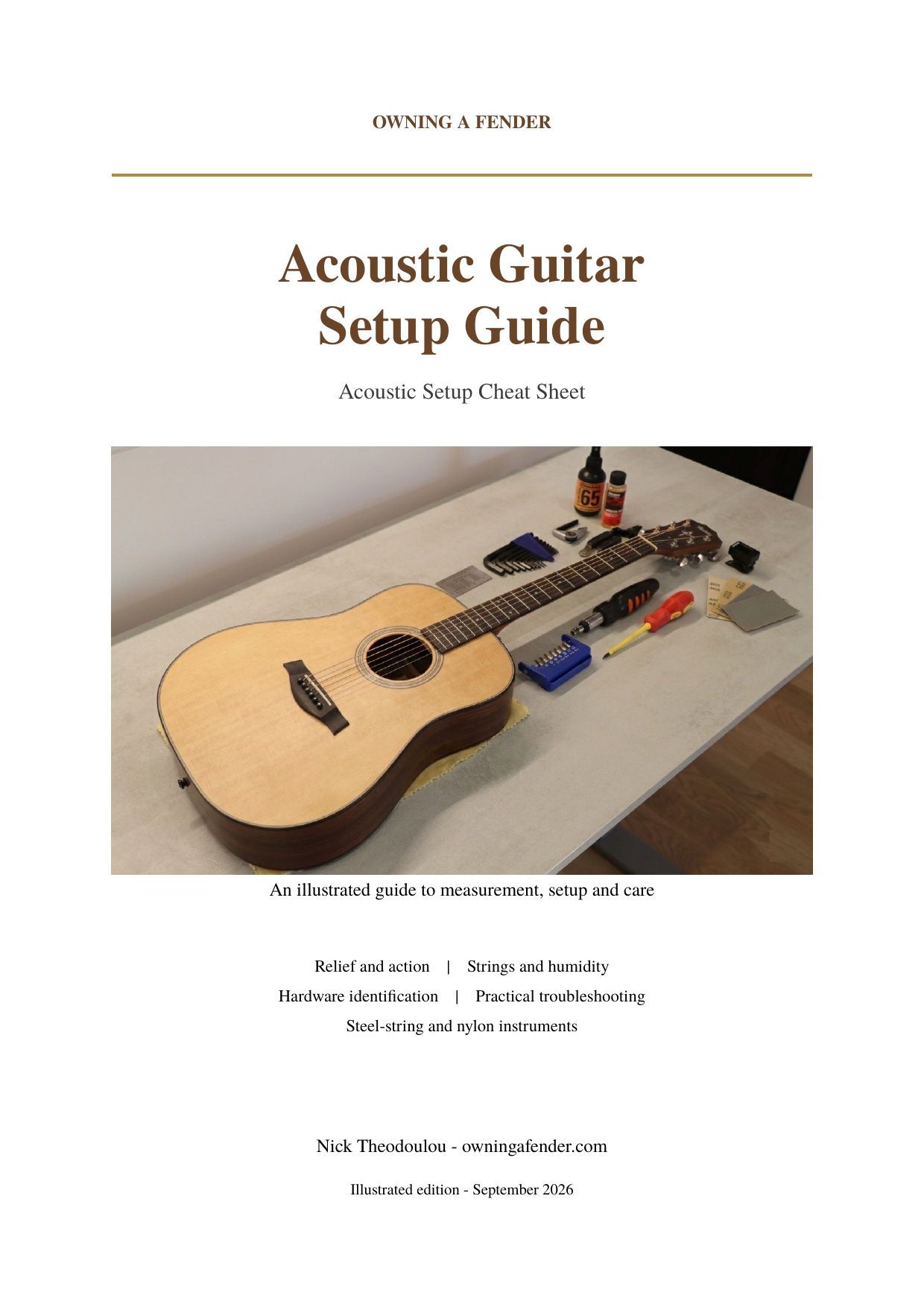
This guide covers the top string sets for Martin dreadnoughts, 000s, OMs, and smaller bodies. We will look at gauge, material, coating, and how each choice changes feel. If you want every Martin setup spec — relief, action, saddle sanding, and string recommendations — on one printable card, the Acoustic Setup Cheat Sheet is built for your workbench.
Quick Answer: Start with the string gauge Martin specifies for your exact model. Then choose the feel you want: D'Addario EJ16 (12–53) for a familiar uncoated phosphor-bronze baseline, Elixir Nanoweb Phosphor Bronze (12–53) when fewer changes matter, or Martin Retro Custom Light (11–52) for a lower-tension, mellower alternative. Martin's current FAQ says the model specification is the source of truth; for example, the current D-28 specification calls for medium phosphor-bronze strings.
Choose Your Next Set by Playing Style
Retail prices and stock change, so the choices below use gauge and use case rather than a fixed price. Open the retailer page to confirm the current pack size and availability.
| If this sounds like you | Start with | Why it is a sensible first try | Keep in mind |
|---|---|---|---|
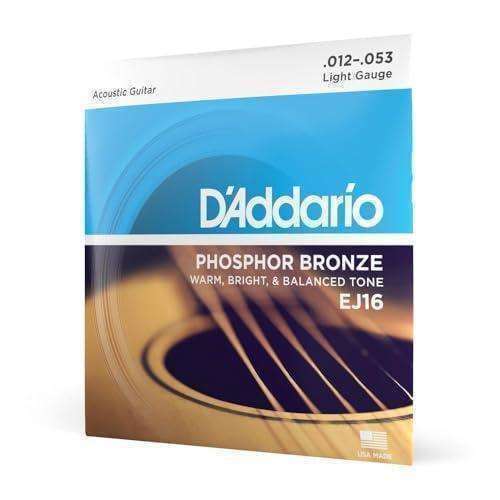
| You want a straightforward everyday phosphor-bronze set | D'Addario EJ16, light 12–53 | A familiar, balanced uncoated baseline for comparing future changes | Check your Martin model's listed factory gauge first |
| You play often or want to change strings less frequently | Elixir Nanoweb Phosphor Bronze, light 12–53 | Coating can slow the loss of fresh-string feel | Coated-string feel and tone are personal preferences |
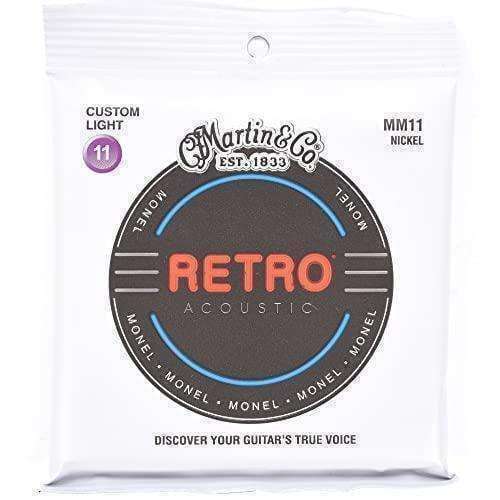
| You play fingerstyle or want a slightly easier feel | Martin Retro Monel, custom light 11–52 | A lower-tension starting point with a less bright, more woody voice | A gauge change can require a relief, action, and intonation check |
| You flatpick or play bluegrass and want a phosphor-bronze alternative | John Pearse 600L, light 12–53 | A useful light-gauge comparison if your current set feels too stiff or too dull | It is a player-preference choice, not a Martin factory recommendation |
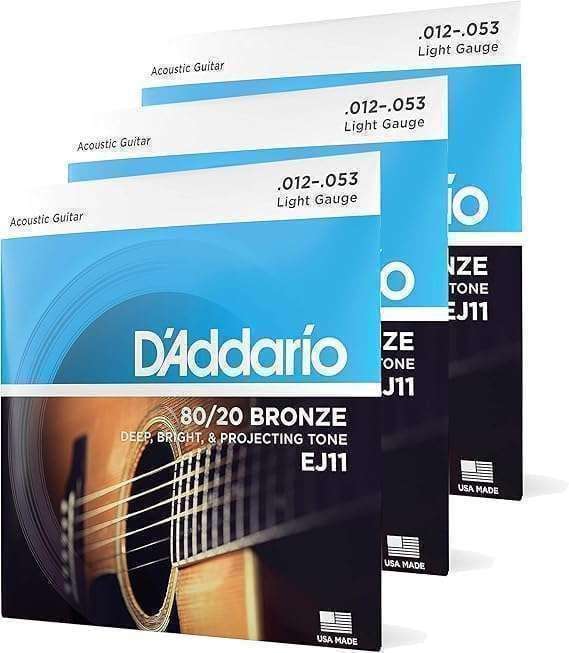
| You mainly strum and want a brighter initial attack | D'Addario EJ11 80/20 Bronze, light 12–53 | 80/20 bronze is a practical contrast to phosphor bronze | It may not keep its fresh brightness as long as every player wants |
Three sensible Martin starting points

 Buy on Amazon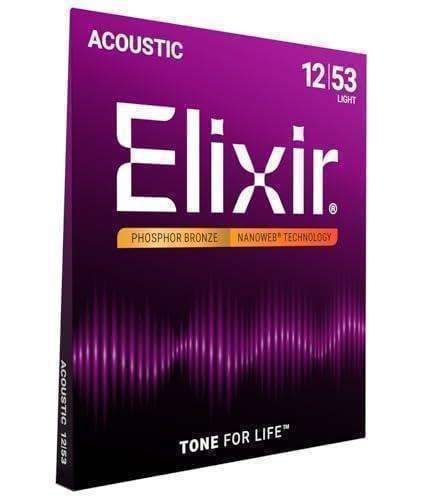
1. D'Addario EJ16 (12-53) — Best Everyday Baseline
Why Martin players love it:
- Phosphor bronze gives you an easy reference point before experimenting with coated, monel, or 80/20 strings.
- Light 12–53 is close enough to many light acoustic sets to make feel comparisons useful.
- Uncoated feel suits players who prefer to change strings regularly rather than preserve a coating.
Best for: Players who want a straightforward uncoated starting point and are willing to change strings when they lose their preferred feel.
2. Elixir Nanoweb Phosphor Bronze (12-53) — Best for Fewer Changes
Why it is worth the investment:
- Nanoweb coating is aimed at players who want a fresh-string feel to last longer between changes.
- Light 12–53 lets you compare it directly with the EJ16 without changing the basic gauge range.
- A consistent surface feel can be useful if sweat or frequent playing shortens uncoated-string life for you.
Best for: Busy players, frequent performers, and anyone who would rather trade a particular coated feel for fewer restringing sessions.
3. Martin Retro Monel (11-52) — Best Lower-Tension Alternative
Why it stands out:
- Monel alloy is a useful alternative when you want a less bright, more woody response than phosphor bronze.
- Custom-light 11–52 usually feels easier under the fretting hand than light 12–53/54.
- A smaller tension change is still a setup change: recheck relief, action, and intonation after the guitar settles.
Best for: Fingerstyle players and anyone exploring a lower-tension or mellower option. For a vintage instrument, confirm its condition and preferred gauge with a qualified repair person.
4. John Pearse 600L (12-53) — Another Light Phosphor-Bronze Option
Why bluegrass pickers choose it:
- Light 12–53 phosphor bronze provides a like-for-like comparison with the EJ16.
- A different build and feel may suit a flatpicker who wants to compare a few similar-gauge sets before changing gauge.
Best for: Flatpickers, singer-songwriters, and players who want to compare phosphor-bronze sets without changing their basic gauge range.
5. D'Addario EJ11 80/20 Bronze (12-53) — Best Bright-Feeling Alternative
Why strummers like it:
- 80/20 bronze gives a brighter contrast to phosphor bronze for players who want more immediate attack.
- Light 12–53 keeps the comparison focused on material rather than a large gauge change.
Best for: Strummers and players who find their current phosphor-bronze strings too warm or subdued.
Martin string choices by use case
Martin String Gauge Guide by Body Size
Martin makes guitars in many body sizes, but the model specification — not body shape alone — should decide your starting gauge. Martin says to check the string recommendation on the exact product page, and to have the guitar professionally checked if you move more than one gauge step away from it. Use the ranges below as questions to ask, not universal permissions to fit any gauge.
Dreadnoughts (D-28, D-18, D-35, DX Series)
Dreadnoughts vary. For example, Martin currently lists medium phosphor bronze for the Standard Series D-28, while other models can have a different factory recommendation. Check your exact model before choosing a set.
- Light 12–53/54: A common player-preference option when it matches the model specification or follows a professionally checked change.
- Medium 13–56: Appropriate only where the model specification supports it; it can suit a strong flatpicking feel.
- Custom light 11–52: A lower-tension option for a player who values ease of fretting, with the usual setup check afterward.
000 and OM Models (000-18, 000-28, OM-21, OM-28)
These mid-size bodies are responsive and articulate, but their factory strings still vary by model and cutaway configuration. Use the product specification as the baseline, then change only for a specific feel or tonal reason.
- 11–52: A sensible lower-tension experiment for fingerstyle if the guitar is set up for it.
- 12–53: A useful light-gauge comparison for light-to-moderate strumming.
- 13–56: Do not assume it is suitable from body size alone; consult your model's specification or a repair professional.
Smaller Martins (00, 0, Little Martin)
Small-body Martins benefit from choosing for comfort and the exact model specification, rather than forcing a general gauge rule.
- 10–47: A possible lower-tension direction for players prioritising easy fretting.
- 11–52: Another common lower-tension option that retains more resistance under the pick.
Vintage and Pre-War Martins
Older Martins deserve an individual inspection before any significant tension change. If you are not sure when your Martin was built, run the number on the neck block through our Martin Serial Number Lookup, then ask a qualified acoustic-guitar repairer about its condition and suitable gauge.
String Material Comparison for Martin Guitars
Phosphor Bronze
Best for: Most Martin players.
Phosphor bronze is the modern acoustic standard. It adds warmth and lasts longer than 80/20 bronze. On a Martin, it emphasizes the strong midrange and controlled bass the brand is known for.
80/20 Bronze
Best for: Strummers who want extra brightness.
80/20 bronze is brighter and more articulate than phosphor bronze, but it loses sparkle faster. It is a good choice if you want a cutting rhythm tone.
Coated Strings
Best for: Players who want long life.
Coated strings such as Elixir Nanoweb can help some players postpone a string change. How long they retain a preferred feel or tone depends on playing time, sweat, and what you consider "worn out"; the coating can also change the surface feel.
Monel / Nickel-Copper
Best for: Vintage tone and fingerstyle.
Martin Retro strings use a monel alloy for an alternative to bronze. The custom-light set listed here changes gauge as well as material; suitability for a vintage guitar depends on its condition, not the alloy alone.
Factory Strings vs. Player Preference
There is no one factory set for every new Martin. Martin directs owners to the individual model specification, and the current D-28 listing, for example, specifies Lifespan 2.0 phosphor-bronze medium strings. Start there rather than assuming every D, 000, OM, or small body uses a light 12–54 set.
Once you know that baseline, make only one deliberate change at a time: try a coated light set for maintenance convenience, a monel custom-light set for a different feel, or an 80/20 set for a brighter initial attack. If you change by more than one gauge step, recheck relief, action, and intonation or ask a tech to do it.
One Next Step Before You Order
Open your Martin's exact model page, note its factory string gauge, then choose the closest row in the table above. If your new set changes the gauge, follow the acoustic string-gauge guide and use the Martin setup guide to recheck the guitar after it settles.
How to Change Strings on a Martin
- Loosen old strings one at a time to avoid sudden neck relief changes.
- Clean the fretboard and bridge while strings are off.
- Thread new strings through the bridge pins and secure them.
- Stretch strings at the 12th fret and retune 3–4 times.
- Let the guitar settle for a few hours before judging tone.
- Recheck action and relief after 24 hours — new tension can shift the neck slightly.
For a complete Martin setup walkthrough, see our Martin Setup Guide.
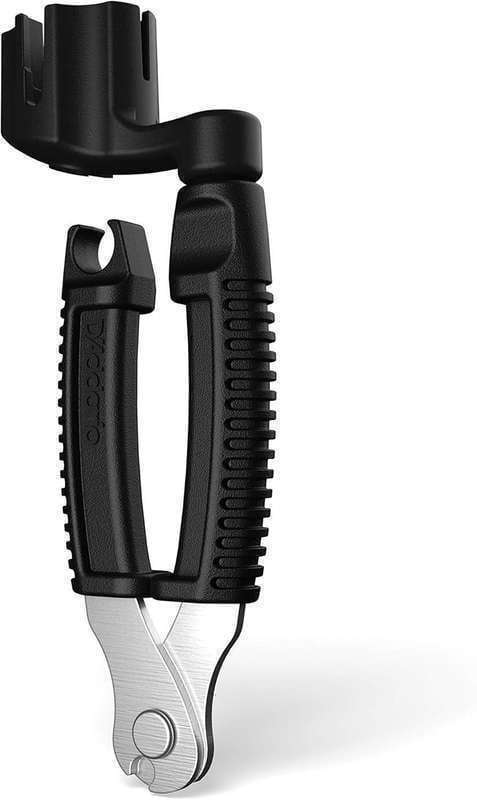
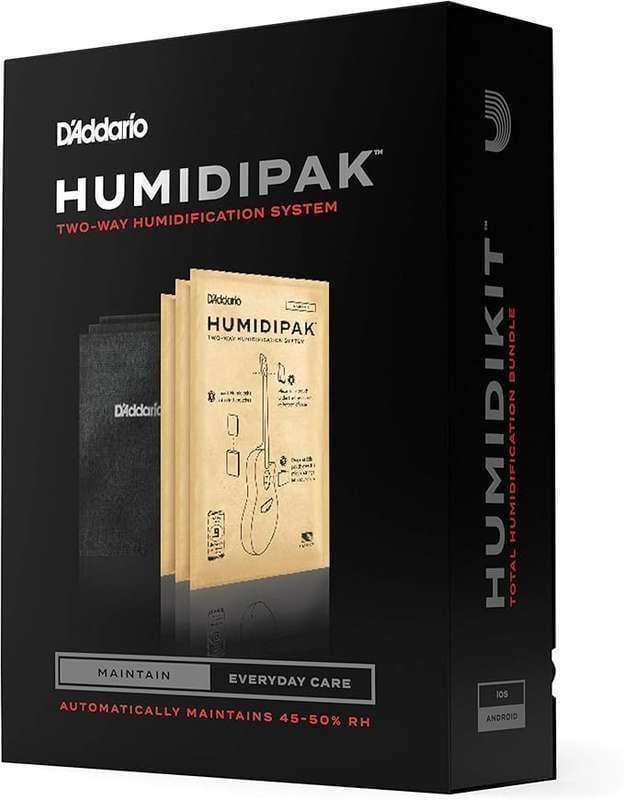
String Change and Care Tools

FAQ
What strings come on a Martin from the factory?
It depends on the exact model. Check Martin's current product specification rather than assuming a universal light 12–54 set; the current D-28 specification, for example, lists Lifespan 2.0 phosphor-bronze medium strings.
What is the best string gauge for a Martin D-28?
Start with the exact D-28 version's current Martin product specification. The current Standard Series D-28 listing calls for medium phosphor bronze; a light or custom-light set is a preference change that should be followed by a setup check.
Are Martin Lifespan 2.0 strings worth it?
They can be a good fit if you prefer the coated feel and want to change strings less often. Longevity is personal: playing time, sweat, and your tolerance for a change in feel or tone matter more than a universal multiplier.
What is the difference between Martin Retro and Phosphor Bronze?
Martin Retro uses a monel alloy, while phosphor bronze is a different alloy with a different feel and tonal balance. The Retro set listed here is custom light 11–52, so it also changes tension; compare one variable at a time if you are trying to find your preference.
Can I use lighter strings on a Martin D-28?
Possibly, but it is a player-preference change from the factory recommendation. Confirm the exact model, then recheck relief, action, and intonation after the guitar settles. Seek a repair professional's advice for a vintage or structurally sensitive guitar.
Do I need to adjust my Martin setup when changing string gauge?
Yes, if you change by more than one gauge step. Heavier strings increase neck tension and raise action. Lighter strings reduce tension and can cause buzz. Recheck relief, action, and intonation after any gauge change.
What are the best strings for a Martin 000?
Start with your exact 000 model's Martin specification. Custom light 11–52 and light 12–53 are useful alternatives to compare for feel, but neither is a universal prescription for every 000.
How often should I change strings on my Martin?
Change them when they no longer feel, tune, or sound the way you want. Visible corrosion, roughness, unstable tuning, or lost clarity are useful signs; there is no single calendar interval that fits every player.
Are Elixir strings good for Martins?
Yes. Elixir Nanoweb Phosphor Bronze strings are popular on Martins because they last longer and maintain brightness. Some players feel the coating slightly smooths the tone; others prefer the consistency over time.
What is the best Martin string for fingerstyle?
Martin Retro 11-52 or D'Addario EJ16 12-53 are both excellent for fingerstyle. The Retro set offers lower tension and vintage warmth; the EJ16 offers balanced projection and crisp note definition.
Conclusion
Choose the best strings for your Martin guitar by checking its factory gauge first, then matching the table above to your playing needs. For example, the current D-28 specification lists medium phosphor bronze. The light and custom-light sets here are alternatives to consider for your preferences, not universal factory replacements.
Your next action is to check your model's recommended gauge before ordering. Once the new strings are fitted, use the free Martin setup walkthrough linked above; the printable guide below is the convenient reference to keep at the bench.