Acoustic Guitar String Gauges: Light vs Medium
Learn how to choose acoustic guitar string gauges by playing style and body size. Compare light vs medium, 11 vs 12 gauge, and how gauge affects your setup.
By Nick TheodoulouUpdated

On this page
- Acoustic Guitar String Gauges by Playing Style
- What Acoustic Guitar String Gauges Actually Mean
- How String Gauge Changes Tone and Playability
- Choosing Acoustic Guitar String Gauges by Playing Style
- Matching Acoustic String Gauge to Body Size
- Light vs Medium Acoustic Strings: The Practical Difference
- Coated vs Uncoated Strings by Gauge
- Changing Gauge Means Changing Your Setup
- Step-by-Step: How to Switch Acoustic String Gauges
- When to Use a Professional Setup
- Frequently Asked Questions
- Conclusion: Match Your Acoustic String Gauges to Your Hands and Your Music

Acoustic Guitar String Gauges by Playing Style
Acoustic guitar string gauges are the fastest way to change how your instrument feels, sounds, and responds to your hands. A set of 12-53 lights feels completely different from 13-56 mediums — not just in tension, but in volume, sustain, bass response, and how easily your fingertips can fret a barre chord.
In this guide, you will learn what each acoustic string gauge actually measures, how to match gauge to your playing style and body size, and why switching gauges almost always means adjusting your setup. We will cover the real differences between 11 vs 12 gauge acoustic strings, light vs medium acoustic strings, and the best string gauge for fingerpicking, strumming, and flatpicking. If you already know your gauge and want specific product picks, our best acoustic guitar strings guide compares eight sets for tone, lifespan, and price.
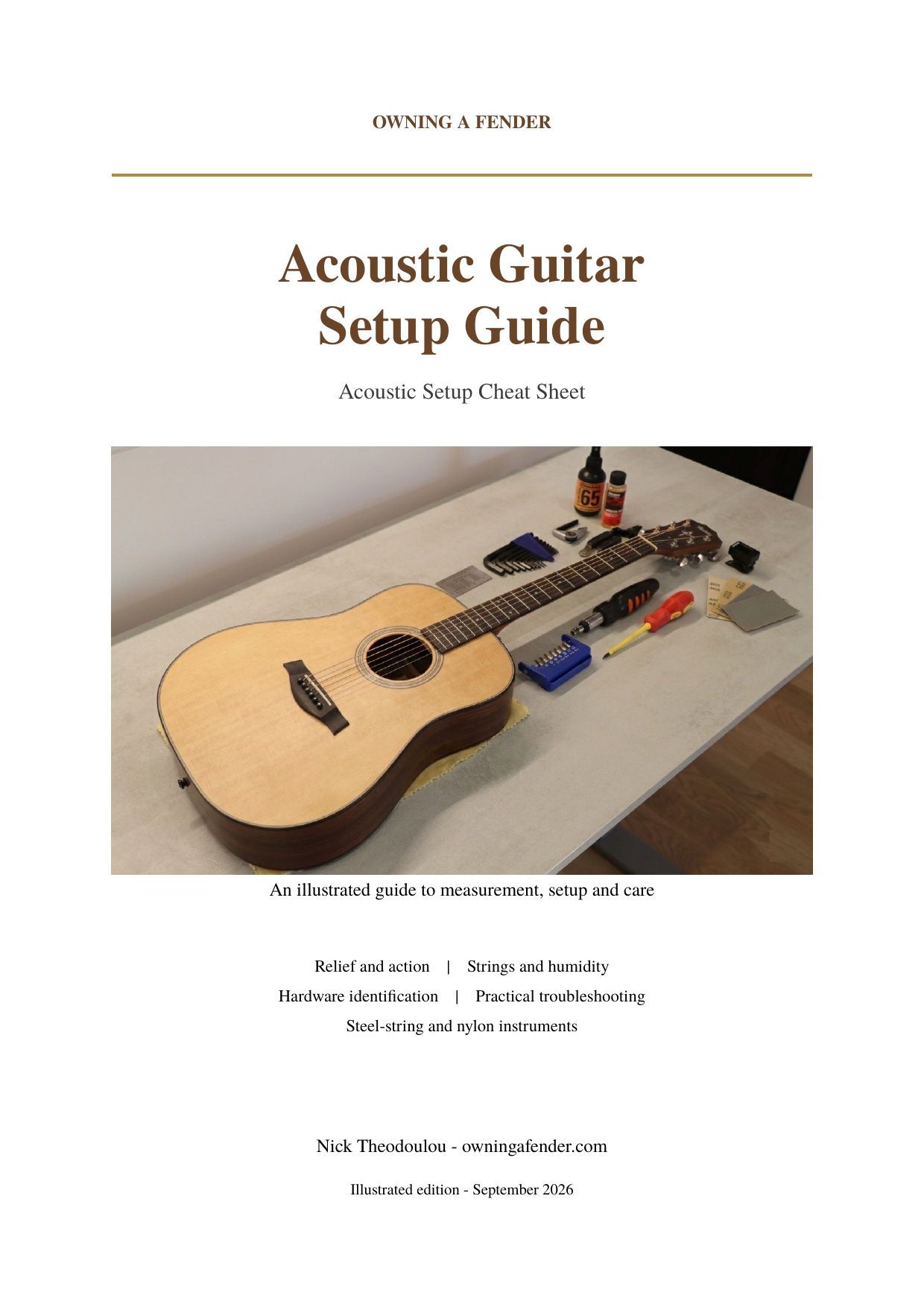
If you want every acoustic setup spec — relief, action, nut slots, intonation, and string recommendations — on one printable reference card, the Acoustic Setup Guide is built for your workbench.
What Acoustic Guitar String Gauges Actually Mean
Acoustic string gauges are usually named by the diameter of the high E string in thousandths of an inch. A "12-53" set has a 0.012" high E and a 0.053" low E. The names are not perfectly standardized, so one brand's "custom light" may overlap with another brand's "light." Always check the actual numbers on the package.
Common Acoustic String Gauge Categories
| Gauge Name | High E | Low E | Total Tension* | Best For |
|---|---|---|---|---|
| Extra Light | .010" | .047" | ~125 lbs | Beginners, small-body guitars, players with hand pain |
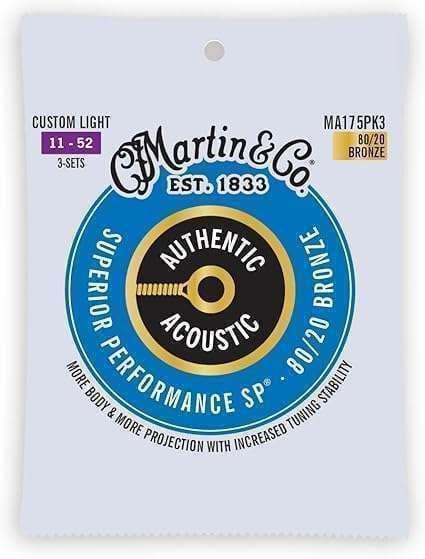
| Custom Light | .011" | .052" | ~140 lbs | Fingerstyle, singer-songwriters, smaller hands |
| Light | .012" | .053" | ~155 lbs | All-around strumming and flatpicking |
| Medium Light | .012" | .054" | ~160 lbs | Slightly heavier rhythm without full medium tension |
| Medium | .013" | .056" | ~180 lbs | Aggressive strummers, drop tunings, maximum projection |
*Approximate total tension in standard E tuning on a 25.5" scale. Longer scales and higher tunings increase tension; shorter scales decrease it.
These categories matter because tension is what you actually feel. A 12-53 set on a dreadnought with a 25.5" scale creates noticeably more left-hand resistance than the same set on a 24.75" scale parlor guitar. Body size also changes how the top responds to that tension, which is why the same gauge can sound boomy on one guitar and thin on another.
How String Gauge Changes Tone and Playability
Every gauge choice trades volume and sustain against left-hand comfort. Understanding the trade-off makes the decision easier than following a generic recommendation.
Lighter Strings: Easier to Play, Less Projection
Lighter acoustic guitar string gauges vibrate with less tension, so they are easier to fret and bend. They put less load on the neck and bridge, which is gentler on older guitars. The downside is reduced volume, thinner bass, and shorter sustain.
Extra-light and custom-light sets are popular with fingerstyle players, beginners building finger strength, and anyone with a small-body guitar that can be overwhelmed by medium tension.
Medium Strings: More Volume, More Resistance
Medium-gauge strings move the top more aggressively, which usually means more volume, fuller bass, and longer sustain. Bluegrass flatpickers and aggressive strummers choose them to cut through a jam without amplification.
The cost is left-hand fatigue and higher action requirements. Medium strings vibrate in a wider arc, so they need more clearance over the frets. Switch from 12-53 to 13-56 without raising action or adding relief and you will likely get rattle on the bass strings.
The 11 vs 12 Gauge Acoustic Strings Question
The jump from 11-52 to 12-53 adds roughly 10–15 pounds of total tension. You get slightly more volume and bass, but also more left-hand resistance and a small change in neck relief. For most players, 12-53 is the safest default. Choose 11-52 if you play mostly fingerstyle, have smaller hands, or own a small-body guitar.
Choosing Acoustic Guitar String Gauges by Playing Style
Your technique is the most important factor in choosing a gauge.
Best String Gauge for Fingerpicking
The best string gauge for fingerpicking is usually custom light 11-52 or light 12-53. Fingerstyle players use a lighter attack than strummers, so they do not need the extra tension of mediums. Lighter strings make Travis picking, arpeggios, and soft dynamics easier.
Many fingerstyle players prefer 11-52 for dynamic control. If you play with nails or fingerpicks and want more projection, 12-53 is a logical step up.
Strumming and Singer-Songwriter Styles
Strummers usually sound best with light 12-53 or medium-light 12-54. These gauges keep chords in tune under aggressive strumming while still allowing comfortable barre chords. A 12-53 set is the acoustic equivalent of 10-46 on a Telecaster: it works for most players in most situations.
If you strum hard with a heavy pick and play in open tunings, medium 13-56 gives more stability and volume.
Flatpicking and Bluegrass
Bluegrass flatpickers almost always choose medium 13-56. The style demands volume, punch, and the ability to dig in with a heavy pick. Medium strings stay in tune through aggressive crosspicking runs.
The trade-off is higher action and a little more relief. A medium-gauge acoustic setup typically runs 7/64" (2.8 mm) on the low E and 5/64" (2.0 mm) on the high E at the 12th fret, compared to 6/64" and 4/64" for lights. Our Acoustic Guitar Action Height Guide has exact targets.
Custom-Light Strings for Fingerstyle

 Buy on Amazon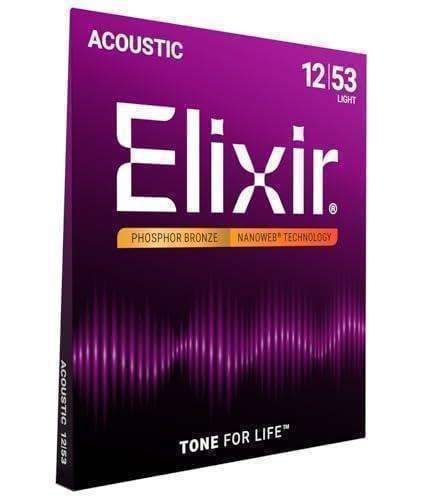
Matching Acoustic String Gauge to Body Size
Body size changes how the guitar responds to string tension. A gauge that sounds full on a dreadnought can choke a parlor guitar.
Dreadnoughts
Dreadnoughts have a large top and strong bracing, so they can handle light 12-53 or medium 13-56. Most ship with 12-53 phosphor bronze because it is the best all-around match. If your dreadnought sounds muddy, try 11-52 to reduce low-end energy. If it sounds thin, 13-56 brings out more projection.
OM, 000, and Grand-Auditorium Guitars
These mid-size bodies are responsive and balanced. They often sound best with custom light 11-52 or light 12-53. The smaller top does not need the brute force of mediums, and lighter gauges preserve the clear, articulate character these body styles are known for. Fingerstyle players especially favor OM and 000 guitars with 11-52 sets.
Concert, Parlor, and Travel Guitars
Small-body guitars usually sound best with extra light 10-47 or custom light 11-52. The lighter top cannot move enough air to support medium strings, and the extra tension can suppress vibration. Dropping from 12-53 to 11-52 often unlocks a sweeter, more open tone on these guitars.
For Martin players, our Best Strings for Martin guide pairs these gauges with specific D-28, 000, OM, and vintage Martin recommendations. If you own an older Martin and want to confirm its year before choosing a gauge, the Martin Serial Number Lookup dates it from the neck-block number.
Jumbo and Grand Jumbo Guitars
Jumbos can handle medium 13-56 without sounding boxy. Many jumbo players choose mediums for maximum strumming volume and bass. If you use the guitar mainly for solo fingerstyle, 12-53 can be more articulate and less boomy.
Light vs Medium Acoustic Strings: The Practical Difference
The light vs medium acoustic strings debate comes down to one question: easier playability or more volume and sustain?
| Factor | Light 12-53 | Medium 13-56 |
|---|---|---|
| Left-hand feel | Easier barres, less fatigue | More resistance, stronger hands needed |
| Volume | Moderate, balanced | Louder, more projection |
| Bass response | Controlled | Fuller, deeper lows |
| Action required | 6/64" low E, 4/64" high E | 7/64" low E, 5/64" high E |
| Neck relief | 0.010"–0.012" | 0.011"–0.014" |
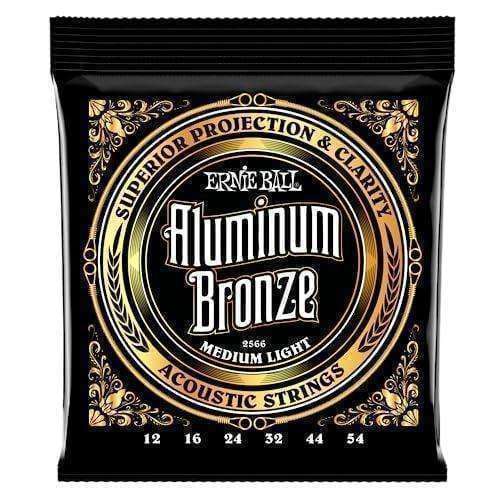
| Best for | Strumming, fingerstyle, all-around | Flatpicking, aggressive strumming, drop tunings |
If you are unsure, start with 12-53. It is the industry default for a reason. You can always go heavier once your hands and your setup are ready.
Light & Medium Acoustic Strings for Strumming & Flatpicking

Coated vs Uncoated Strings by Gauge
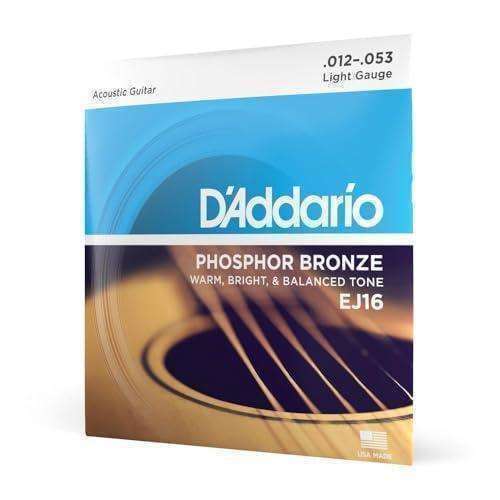
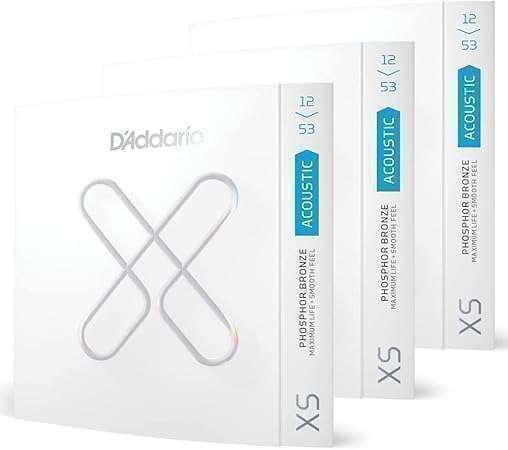
Coating does not change the gauge, but it changes feel and lifespan. Coated strings like Elixir Nanoweb and D'Addario XS have a polymer barrier that slows corrosion.
When Coated Strings Make Sense
Coated strings are worth the extra cost if you play frequently, live in a humid climate, or hate changing strings. They maintain brightness and intonation longer, especially in lighter gauges where plain strings go dead quickly. Fingerstyle players also like the reduced string squeak.
When Uncoated Strings Sound Better
Uncoated strings have more initial zing and tactile response when fresh. If you change strings often and want maximum brightness, uncoated is the way to go.
Material Matters: 80/20 Bronze vs Phosphor Bronze
- 80/20 bronze sounds brighter and more articulate when new, with a faster decay into warmth.
- Phosphor bronze starts slightly warmer and holds brightness longer.
Neither is objectively better. Try the same gauge in both materials and let your ears decide.
Coated & Long-Life Acoustic Strings

Changing Gauge Means Changing Your Setup
This is the most important section in the guide. Every time you change acoustic guitar string gauges, you change the tension load on the neck, bridge, and top. That changes relief, action, intonation, and sometimes nut slot fit.
What Happens When You Go Heavier
Switching from 12-53 to 13-56 adds roughly 20–25 pounds of total tension. The neck bows forward, raising action. Nut slots may be too narrow for thicker strings, causing them to sit high or bind. Intonation at the 12th fret will likely drift.
The fix is a full setup: adjust truss rod relief, reset action at the saddle, check nut slots, and re-intonate. The Acoustic Setup Guide walks through this with printable specs for Taylor, Martin, Yamaha, and other major brands.
What Happens When You Go Lighter
Switching from 12-53 to 11-52 reduces tension. The neck may straighten or back-bow slightly, lowering action and potentially causing buzz. Lighter strings vibrate in a smaller arc, so you can run lower action — but only if relief stays correct.
Do Lighter Strings Lower Action?
Lighter strings do not physically lower action, but they allow lower action without buzzing. Because they vibrate in a smaller arc, they need less clearance over the frets. A guitar set up for 13-56 will feel high with 11-52, but you can safely lower it. Use the Setup Specs Lookup tool to find factory targets for your model.
Step-by-Step: How to Switch Acoustic String Gauges
Use this sequence whenever you move up or down in gauge. Skipping steps is how setups end up worse than when you started.
1. Choose Your New Gauge and String Material
Decide on gauge, material, and coated or uncoated based on your playing style and body size. If you are jumping more than one gauge category, plan on a full setup.
2. Install the Strings and Tune to Pitch
Put the new set on, stretch the strings gently, and tune to concert pitch. Let the guitar sit under tension for at least 30 minutes, or preferably overnight, so the neck can settle.
3. Check Neck Relief
Capo the first fret and hold down the last fret. Measure the gap at the 7th or 8th fret. For light strings, aim for 0.010"–0.012". For medium strings, aim for 0.011"–0.014". Adjust the truss rod in 1/8-turn increments. See our guitar truss rod adjustment guide for a full walkthrough.
4. Measure and Adjust Action
Measure action at the 12th fret from the top of the fret crown to the bottom of the string. For lights, target 6/64" (2.4 mm) low E and 4/64" (1.6 mm) high E. For mediums, target 7/64" and 5/64". Adjust saddle height by sanding the bottom using the 2:1 rule: remove twice as much from the saddle bottom as the action reduction you want at the 12th fret. The guitar action height guide has the full measurement walkthrough and electric targets.
5. Check Nut Slot Fit
Heavier strings may not sit fully in the nut slots. If a string sits above the slot or binds when tuning, widen the slot with a gauged nut file. If slots are too low after switching to lighter strings, the nut may need a shim or replacement.
6. Set Intonation
Compare the open string note to the 12th fret harmonic. If the fretted note is sharp, move the saddle back. If flat, move it forward. On an acoustic, saddle position is fixed, so you may need a compensated saddle for large gauge changes.
7. Play Test and Fine-Tune
Play chords, scales, and your typical repertoire. Listen for buzz or tuning instability. Small adjustments to relief and action usually finish the job. If buzz persists after correct relief and action, check for uneven frets.
When to Use a Professional Setup
Some gauge changes and setup issues are better handled by a technician. Know when to stop before you turn a simple string change into an expensive repair.
See a pro if:
- The truss rod is maxed out or will not turn smoothly.
- The nut slots need widening and you do not have gauged nut files.
- The saddle is already low and you still need to lower action further.
- You hear buzz after setting correct relief and action, which may indicate uneven frets.
- You own a vintage or valuable instrument.
A professional acoustic setup typically costs $60–$120. Before investing in major work on a used guitar, get a Guitar Price Estimate to make sure the value justifies the expense.
Frequently Asked Questions
What are the most common acoustic guitar string gauges?
The most common acoustic guitar string gauges are extra light 10-47, custom light 11-52, light 12-53, and medium 13-56. Light 12-53 is the factory standard on most steel-string acoustics and works for strumming, flatpicking, and light fingerstyle.
What is the best string gauge for fingerpicking?
The best string gauge for fingerpicking is usually custom light 11-52 or light 12-53. The lighter tension makes complex patterns easier and gives better dynamic control. Players who want more projection can use 12-53; those who want maximum ease can use 11-52 or silk-and-steel sets.
11 vs 12 gauge acoustic strings: which should I choose?
Choose 11-52 if you play fingerstyle, have smaller hands, or own a small-body guitar. Choose 12-53 if you strum aggressively, play bluegrass, or want a balanced all-around tone. The 12-53 set adds roughly 10–15 pounds of total tension and produces slightly more volume and bass.
Do lighter strings lower action on an acoustic guitar?
Lighter strings do not automatically lower action, but they allow you to set lower action without fret buzz. Because lighter strings vibrate in a smaller arc, they need less clearance over the frets. A setup done for mediums will feel high with lights, but can usually be lowered safely.
Are medium strings too heavy for beginners?
Medium 13-56 strings are usually too heavy for beginners. The extra tension makes barre chords and fingerpicking difficult and can cause hand fatigue. Most beginners should start with light 12-53 or custom light 11-52 and move to mediums only after building finger strength.
What gauge strings do famous acoustic players use?
Many professional acoustic players use light 12-53 or medium 13-56 depending on style. Bluegrass flatpickers like Tony Rice and Bryan Sutton historically favored medium-gauge strings for projection. Fingerstyle players like Tommy Emmanuel often use light or custom-light sets for flexibility.
Does body size affect which string gauge I should use?
Yes. Large dreadnoughts and jumbos can handle medium strings without choking. Smaller concert, parlor, and travel guitars usually sound better with custom light or extra light strings because the lighter top cannot move enough air to support heavy tension.
Should I use coated or uncoated acoustic strings?
Use coated strings if you want longer life, less corrosion, and reduced finger squeak. Use uncoated strings if you prefer maximum brightness and attack when fresh and do not mind changing strings more often. Coated strings cost more upfront but often last 3–5 times longer.
Can I switch string gauges without a setup?
Going up or down one gauge category — for example, 11-52 to 12-53 — usually requires only minor adjustments to relief and intonation. Jumping two or more categories almost always requires a full setup including truss rod, saddle height, nut slots, and intonation.
What material is best for acoustic guitar strings?
Phosphor bronze is warm and long-lasting, making it the most popular all-around choice. 80/20 bronze is brighter and more articulate when new. Silk and steel sets are softer and mellower, ideal for vintage guitars and fingerstyle. Try the same gauge in different materials to find what your guitar likes best.
Conclusion: Match Your Acoustic String Gauges to Your Hands and Your Music
Choosing the right acoustic guitar string gauges is one of the simplest ways to improve how your guitar plays and sounds. Start with the gauge that matches your playing style and body size: custom light 11-52 for fingerstyle and small bodies, light 12-53 for all-around strumming, and medium 13-56 for flatpicking and aggressive rhythm work.
Remember that changing gauges changes your setup. Neck relief, action, nut slot fit, and intonation all shift with tension. A guitar set up for lights will not play its best with mediums until you adjust those four things. The process takes about 30–60 minutes once you know the measurements.
For a complete acoustic setup reference you can keep at your workbench, grab the Acoustic Setup Guide. It includes printable specs for relief, action, nut slots, intonation, and string recommendations for Taylor, Martin, Yamaha, and more. If you are deciding whether a vintage or budget acoustic is worth a professional setup, the Guitar Price Estimate will give you a market-based valuation first.
Related acoustic setup resources:
- Ultimate Acoustic Guitar Setup Guide — complete relief, action, nut, and intonation walkthrough
- Acoustic Guitar Action Height Guide — exact measurements and the 2:1 saddle rule
- Best Acoustic Guitar Strings — brand-by-brand recommendations and buyer's guide
- Guitar Truss Rod Adjustment Guide — set neck relief before adjusting action
- Factory Setup Specs Lookup — find measurements for your exact acoustic model
Keep reading
Next for your Acoustic
- Same guitarAcoustic Guitar Humidity: What to Check When Action ChangesRead
- Same guitarAcoustic Guitar Action Height: Measure Before You AdjustRead
- Same guitarAcoustic Guitar Truss Rod Adjustment: Measure FirstRead
Everything for your Acoustic
Open the hub