Gibson SG Setup Guide: Action, Pickups & Intonation
Gibson SG setup guide: identify your bridge and pickups, then set relief, action, pickup height and intonation with verified specs and clear DIY limits.
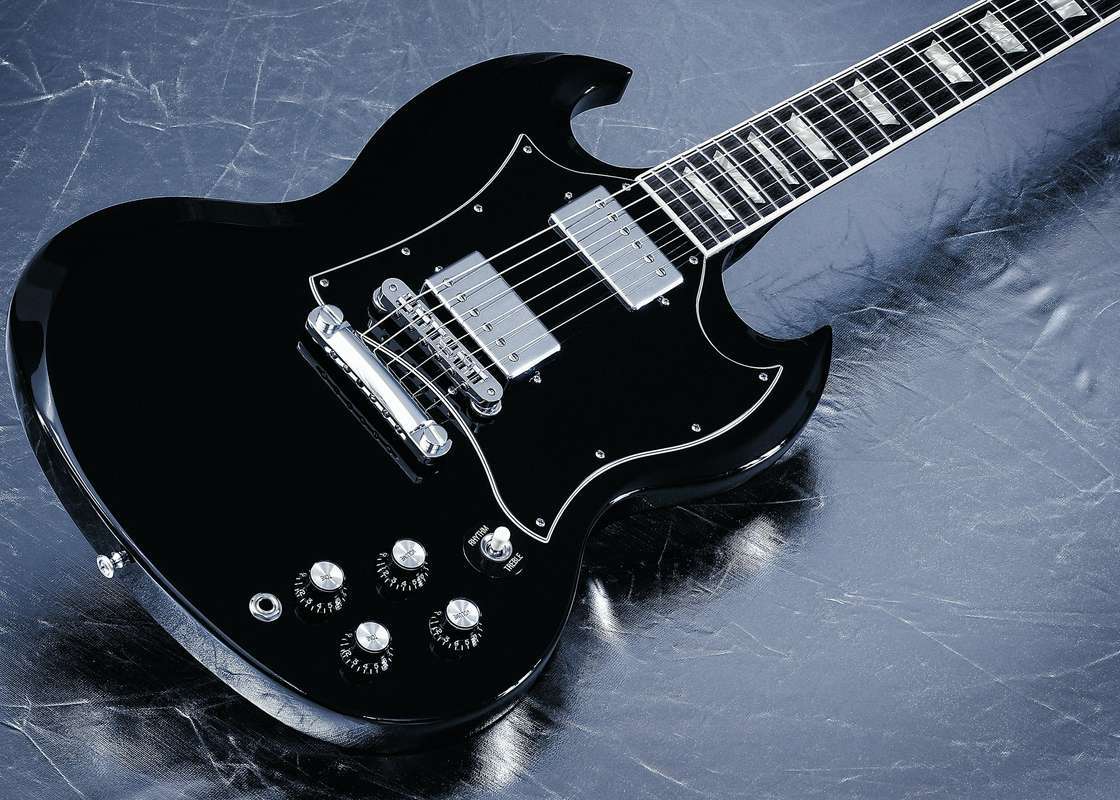 Photo by John Cardamone on Unsplash
Gibson SG Setup: Specs That Match Your Actual Guitar
The Gibson SG is the lightweight, fast-necked rock machine that took over Gibson's solid-body line in 1961, and a proper Gibson SG setup is what turns a buzzy, dive-prone plank into the snarling, upper-fret-shredding instrument it was built to be. Because the SG trades the Les Paul's thick maple cap for a thin solid-mahogany body and a slimmer neck, it responds to setup tweaks differently — the Tune-o-Matic bridge typically sits higher on its posts because of the shallower neck angle, the angled headstock is more vulnerable on a thinner neck joint, and the featherweight body fights you on strap balance.
Not every SG leaves the factory with the same hardware. A current SG Standard carries different pickups and a different bridge than an SG Standard '61, and the P-90-equipped Special and Junior use a wraparound bridge with no individual saddles at all. So this Gibson SG setup guide starts with identification, then walks through relief, action, pickup height, and intonation with verified starting specs — and a clear line where DIY stops and a tech takes over.
Part 1: Identify Your SG's Bridge and Pickups First
Quick Answer: Check which bridge and pickups are actually installed before following any setup instruction. A Nashville Tune-o-Matic, an ABR-1, and a wraparound bridge adjust differently, and humbucker starting heights do not transfer directly to P-90s.
Gibson's own model specifications show how much the current SG family varies:
| SG Model (current line) | Pickups Installed | Bridge & Tailpiece | Setup Implication |
|---|---|---|---|
| SG Standard | 490R neck / 490T bridge humbuckers (Alnico 2) | Nashville Tune-O-Matic + aluminium Stop Bar | Full thumbwheel and saddle adjustment; widest intonation travel |
| SG Standard '61 (incl. Faded, Maestro Vibrola) | 60s Burstbucker humbuckers | ABR-1 Tune-O-Matic + Stop Bar (Maestro Vibrola variant) | Narrower ABR-1 saddles with retainer wire; Vibrola adds tuning checks |
| SG Special | Two soapbar P-90s | Compensated wraparound bridge/tailpiece | Action is set at the two studs; per-string intonation is limited |
| SG Junior | Single dogear P-90 | Compensated wraparound bridge/tailpiece | Same wraparound limits; no neck pickup to balance |
| SG Modern / SG Supreme | Burstbucker Pro humbuckers with push/pull coil taps | Nashville Tune-O-Matic + Stop Bar | Compound-radius ebony board; coil taps change your balance targets |
| Gibson Custom SGs ('63/'64 reissues, SG Custom) | Custombucker (Alnico 3) or P-90s, depending on model | ABR-1 or wraparound, period-correct | Vintage-style hardware needs the gentlest touch |
Used and older SGs vary further. Some model years of the SG Standard shipped with a 490R/498T pairing (the 498T is Gibson's hotter Alnico 5 bridge humbucker), others with '57 Classics, and vintage or Custom Shop reissues usually carry the ABR-1 rather than the Nashville. Read the actual hardware on your guitar, not the model name on the listing you bought it from.
Essential Tools and Prep Checklist
- Protect the neck joint: The SG's set neck is thinner at the joint than a Les Paul's. Always work on a padded bench with a neck rest before touching the truss rod.
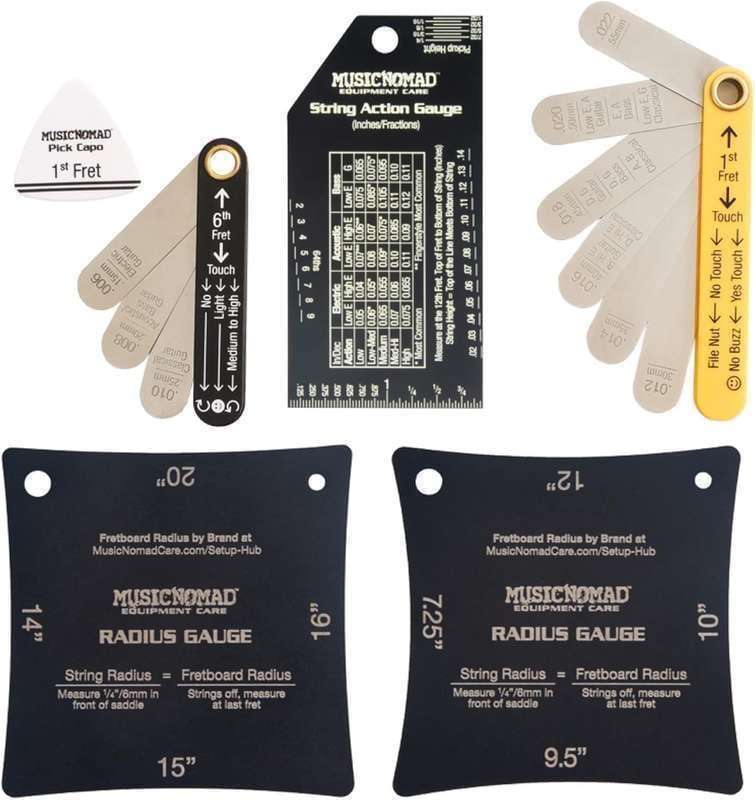
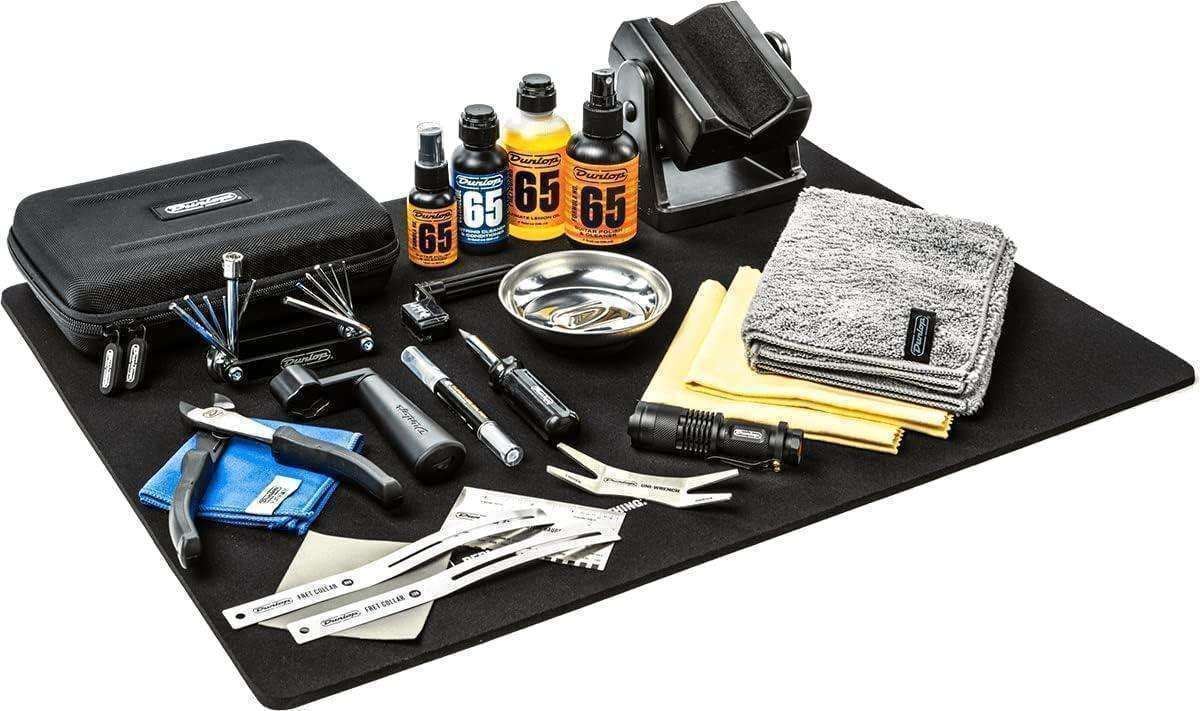
- Measuring kit: Jim Dunlop String Action Gauge, feeler gauges (.008"–.020"), a capo, and a straightedge keep your specs repeatable.
- Adjustment tools: 5/16" truss rod wrench, small flathead for saddle screws, and a multi-tool for quick tweaks. Nut files and fret tools are deliberately not on this list — see Part 8 for why.
- Reference data: Relief 0.010" (0.25 mm), action 1.5–2.0 mm at the 12th fret, stopbar just clear of the bridge's rear edge.
- Workspace: Padded bench, neck rest, bright task lighting, and a notebook to capture "before and after" measurements.
| Task | Target Spec | Tool(s) | Cross-Reference |
|---|---|---|---|
| Neck relief | 0.010" (0.25 mm) @ 8th fret | Capo + feeler gauges | Guitar Truss Rod Adjustment |
| Action | 1.5–2.0 mm @ 12th fret | String action gauge | Guitar Action Height Guide |
| Pickup height | Bridge 2.4/1.6 mm, Neck 2.8/2.0 mm (starting points — Gibson publishes no numeric pickup spec) | Ruler + screwdriver | Les Paul Setup Guide |
| Stopbar tension | Lowest without bridge contact | Flathead + sharpie marks | Setup Specs Lookup |
📊 Quick Tools: Factory Specs • Gibson Serial Number Lookup • Fender Serial Number Lookup • My Garage
Part 2: Inspect First, Then Measure — in This Order
Quick Answer: Fit fresh strings, tune to pitch, inspect the hardware, then measure relief, 12th-fret action, and first-fret height before adjusting anything. Pickup height and intonation come last because every earlier change moves them.
Most failed setups come from adjusting before measuring. Run this sequence and write every reading down:
- Fresh strings, at pitch — Install the gauge you actually play. Current Gibson SG spec sheets list .010–.046 from the factory; a different gauge changes neck tension and invalidates old measurements.
- Inspect, don't adjust — Confirm the bridge and pickup types from Part 1. Look for fret wear, leaning stopbar studs, a loose ABR-1 retainer wire, and any crack line at the headstock or neck joint.
- Measure neck relief — Capo the 1st fret, hold the low E at the last fret, read the gap at the 8th.
- Measure action — 12th fret, guitar in playing position, fret-top to string-bottom.
- Check first-fret height — Fret each string at the 3rd fret and look for a hair of clearance over the 1st. If the nut is wrong, stop: that's tech work (Part 8).
- Set pickup height — Only after the string heights are final.
- Intonate — Last, because it depends on everything above.
Your notebook readings are the baseline for the next string change — this is exactly the workflow the printable Gibson spec card formalises.
Part 3: Understanding SG String Height (Action)
Quick Answer: A practical all-round starting point for Gibson SG action is 1.5 mm (4/64") on the high E and 2.0 mm (5/64") on the low E at the 12th fret. The SG's lighter body and slimmer neck make low action feel fast, but players who dig in hard often push the bass side toward 2.2 mm for headroom.
Most SGs share the Les Paul's 24.75" scale length and 12" fretboard radius (the compound-radius Modern and Supreme excepted), so the string-height math is nearly identical. The difference is feel: at roughly 6–7 lbs, the SG body offers less mass behind the bridge, so the same measurement reads as more lively — and more prone to buzz if the neck is over-straightened.
For context, the figures often quoted as "Gibson factory action" — around 3/64" (1.2 mm) treble and 5/64" (2.0 mm) bass at the 12th fret, with roughly 1/64"–2/64" at the first fret — circulate on forums and in shop practice, but Gibson does not publish a numeric action table; its official setup guidance is video-based (checked September 2026). Low factory targets are set to survive shipping, not to fit your hands; treat the table below as a starting point and adjust to your touch.
| String | Standard Height (12th fret) | Genre Notes |
|---|---|---|
| High E | 1.5 mm / 4/64" | Fast lead, bends |
| B | 1.6 mm / 0.063" | Smooth vibrato |
| G | 1.7 mm / 0.067" | Prevents wolf tones |
| D | 1.8 mm / 0.071" | Rhythm clarity |
| A | 1.9 mm / 0.075" | Detuned punch |
| Low E | 2.0 mm / 5/64" | Palm-mute control |
Always measure action with the SG in playing position, not flat on its back — the thin neck shifts slightly under gravity and your readings will be off.
Part 4: Adjusting Action on an SG
Quick Answer: On a Tune-o-Matic-equipped SG, raise or lower overall action with the two thumbwheels; on a wraparound-equipped Special or Junior, action is set at the two studs instead. Always retune and re-measure at pitch.
- Check neck relief first – Capo the first fret, fret the last, and measure at the 8th fret. Ideal relief is 0.010" (0.25 mm). Adjust the truss rod clockwise to reduce relief, counterclockwise to add, in 1/8-turn increments.
- Support the neck – Because the SG neck joint is thinner, cradle the neck on a rest before leaning on the truss rod wrench. Never force a stubborn rod.
- Level the bridge – Make sure both Tune-o-Matic thumbwheels sit at matching heights so the bridge is parallel to the strings. Because of the SG's shallow neck angle, the bridge usually sits higher on its posts than on a Les Paul; keep it stable on both posts.
- Dial in thumbwheel height – Turn clockwise to lower, counterclockwise to raise. Move both posts in equal increments for balanced feel.
- Check individual strings – If one string still buzzes, look at its saddle: the notch should be centred and the saddle should sit square. Re-cutting or shimming saddle notches is tech work, not a bench tweak.
- Retune and test – Play across positions, bend the G and high E, and listen for choking between the 12th and 17th frets.
Measure the Strings, Not the Thumbwheels
Post and thumbwheel positions are meaningless to copy from another guitar — they vary with neck angle, top carve, and model year. The only numbers that transfer are string heights at the 12th fret, so set your target there and let the hardware land where it lands.
Pro tip: Mark each thumbwheel position with a fine-tip marker before major adjustments so you can revert instantly if the SG starts buzzing or choking on bends.
Essential SG Setup Tools
 Buy on Amazon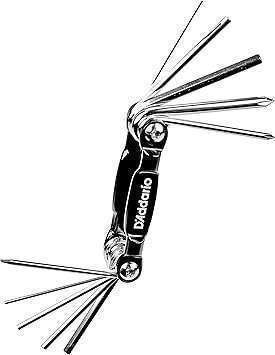
Part 5: SG Pickup Height — Humbuckers and P-90s
Quick Answer: A common humbucker starting point is 2.4 mm (3/32") on the bass side and 1.6 mm (1/16") on the treble side for the bridge pickup, measured while fretting the last fret. P-90s typically start a touch lower. Gibson publishes no numeric pickup-height spec — its official pickup-height guidance is a video walkthrough — so treat every figure here as a starting point, then balance by ear.
Which pickups you have changes the starting numbers and the adjustment method, so match your SG to the Part 1 table first. The SG Standard line uses 490R/490T humbuckers, the '61 models use 60s Burstbuckers, Modern and Supreme models use Burstbucker Pros, and the Special and Junior use P-90s. Older Standards variously used the hotter 490R/498T pairing or '57 Classics — a hotter bridge pickup like the 498T can sit slightly lower because its extra output compensates for the distance.
| Pickup | Bass Side | Treble Side | Notes |
|---|---|---|---|
| Neck Humbucker | 2.8 mm (7/64") | 2.0 mm (5/64") | Keep airy to avoid mud |
| Bridge Humbucker | 2.4 mm (3/32") | 1.6 mm (1/16") | Higher for bite; lower hot pickups |
| P-90 (bridge) | 2.8 mm (7/64") | 2.4 mm (3/32") | Raise for snarl |
| P-90 (neck) | 3.2 mm (1/8") | 2.8 mm (7/64") | Lower to clean up mud |
Steps for Precise Pickup Height
- Identify the mounting – Ring-mounted humbuckers and soapbar P-90s adjust with height screws; a dogear P-90 (SG Junior) sets its height with shims under the ears, so don't expect screws to move it.
- Match the string radius – The SG's 12" radius means your pole pieces should trace a gentle arc, not a flat line.
- Balance the pickups – Start with the bridge, then raise the neck until both read at equal volume in the middle toggle position. If your SG has coil taps (Modern/Supreme), check the balance tapped and untapped.
- Refine the pole pieces – On PAF-style humbuckers, raise the D and G poles slightly for chord clarity.
- Play at stage volume – Humbuckers and P-90s both compress under gain; final tweaks should happen through your loudest rig, not a clean bedroom amp.
Part 6: Tune-o-Matic Bridge, Stopbar, and Intonation
Quick Answer: Set the stopbar as low as possible without the strings touching the back of the bridge. Intonate by moving saddles forward if notes are flat, back if sharp, always comparing the 12th-fret harmonic to the fretted note. On a wraparound bridge, there are no saddles to move — see the wraparound note below.
On an SG, the bridge and stopbar usually sit higher above the thin body than on a Les Paul because of the shallower neck angle. That means break angle matters — too little and the strings rattle on the bridge's rear edge; too much and the shallow neck angle fights you on tuning.
ABR-1 vs Nashville: Know Which Tune-o-Matic You Have
| Feature | ABR-1 | Nashville |
|---|---|---|
| Found on | SG Standard '61, vintage SGs, Custom reissues | Current SG Standard, Modern, Supreme |
| Saddles | Narrower, held by a thin retainer wire | Wider, snap-in, more intonation travel |
| Bridge posts | Smaller posts mounted directly into the top | Larger posts in threaded body bushings |
| Setup caution | Posts can lean or rock; wire can rattle | Check bushings are fully seated |
Stopbar & Break Angle
- Top-wrapped vs standard – Top-wrapping changes the break angle over the bridge and may change bending feel. It does not lower the tension needed for the same string, vibrating length and tuned pitch. See D’Addario’s explanation of string tension.
- Avoid string-to-bridge contact – Raise the stopbar a turn if strings graze the rear edge of the Tune-o-Matic; buzzing will follow.
- Maestro Vibrola models – '61-style SGs with a Maestro Vibrola replace the stopbar; intonate the same way but expect more tuning drift — lubricate the nut and stretch strings thoroughly.
Wraparound Bridges (SG Special and Junior)
The compensated wraparound has no individual saddles. Action is set at the two studs, and intonation relies on the compensated ridge positions. If one string won't intonate on a wraparound, the fix is a compensated replacement fitted by a tech — not a thumbwheel tweak.
Intonation Checklist
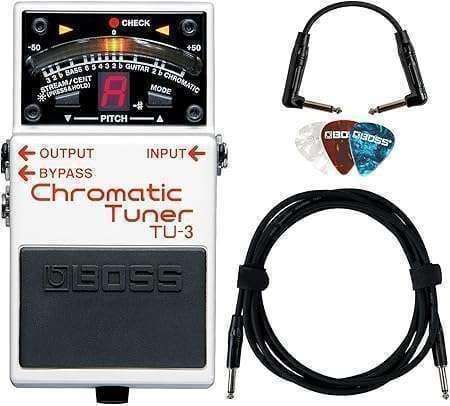
Use the free guitar intonation checker alongside your tuner for saddle-direction guidance and a printable six-string checklist. Choose the individual adjustable saddle option for a Tune-o-Matic bridge.
- Tune to concert pitch with a quality tuner.
- Compare the 12th-fret harmonic to the fretted note.
- If the fretted note is sharp → move the saddle back (toward the tailpiece).
- If the fretted note is flat → move the saddle forward (toward the pickups).
- Retune after every adjustment and re-check.
Part 7: Neck Relief, the Nut, and the Fragile Headstock
Quick Answer: Aim for 0.010" (0.25 mm) relief and treat first-fret height around 0.018"–0.020" as a reference to check, not a target to file toward. And treat the angled headstock with respect — an SG headstock break is an expensive repair.
- Relief – Too little relief causes buzz in the lower frets; too much makes the SG feel stiff. Adjust in micro-turns and let the wood settle between tweaks.
- First-fret height – High nut slots wreck intonation and make open chords stiff; slots cut too low sitar-buzz on open strings. Measuring is DIY; cutting or filling slots is not (Part 8).
- The angled headstock – Gibson's angled headstock — 17° on most models, 14° in some eras — is the SG's biggest structural weak point, amplified by the thinner neck. Always store the SG in a case with headstock support, never lay it on its back on a hard floor, and use a 5/16" box wrench — never an adjustable crescent — on the truss rod.
Part 8: When to Stop DIY and See a Tech
Quick Answer: Truss rod tweaks, thumbwheel heights, stopbar position, pickup height, and intonation are routine DIY. Nut cutting, fret work, and anything structural are not.
Take the SG to a qualified tech when you hit any of these:
- Nut work – Slots that need cutting, filling, or a full replacement. One slip with a nut file means a new nut.
- Fret problems – A fret rocker finds high frets, or buzz persists in one spot no matter what you set. Levelling and crowning are pro jobs.
- Truss rod trouble – The rod is seized, the nut is rounding, or more than a half-turn of adjustment changes nothing.
- Hardware structure – ABR-1 posts that lean or rock, stopbar studs creeping forward, or a wraparound that can't intonate.
- Anything that looks like a crack – Headstock or neck-joint crack lines are a repair, not a setup. Stop and get it assessed before stringing back up.
Part 9: Electronics, Pots, and Grounding
Quick Answer: SG wiring rewards clean solder joints, proper shielding, and smooth-taper pots. Scratchy controls or hum usually trace back to dirty lugs or a cold ground.
- Clean the pots – Spray contact cleaner into the casing and rotate each knob fully 10–15 times.
- Check grounds – Some noise changing when you touch the strings is normal. Test a known-good cable and a clean amp setting before suspecting a wiring fault; have a technician check continuity if the noise is excessive or intermittent.
- Swap caps thoughtfully – 0.022 µF is the common value. A 0.015 µF neck tone cap keeps clarity for jazz cleans.
- Push/pull options – The SG Modern and Supreme already ship with coil taps; on other models, splits, phase switches, or series wiring add flexibility without changing the SG's classic silhouette.
Part 10: Maintenance and Climate Control
Quick Answer: Wipe strings after every session, keep the nitro finish clean, hold humidity between 45–55%, and schedule a pro setup every 6–12 months.
- Daily – Wipe strings and hardware to slow corrosion.
- Monthly – Check stopbar studs for creep and tighten tuner bushings.
- Seasonal – Monitor humidity swings; nitro finishes and glued neck joints react quickly.
- String choices – .010–.046 is what current Gibson SG spec sheets list from the factory. A lower tuning may benefit from a heavier set, but choose by feel and check relief, nut fit and intonation after changing gauge.
Care and Climate Gear

Part 11: Beating SG Neck Dive and Balance
Quick Answer: Start with a wide, grippy strap and check that both strap attachments are secure. Neck dive is a balance issue: adding heavier tuners increases headstock mass and can make it worse. Avoid drilling new strap-button holes as a first response.
Try the guitar on its usual strap while supporting it with your hands. A wider leather or suede strap can reduce slipping, although comfort and balance vary between players. Secure strap locks help prevent detachment; they do not change the guitar's centre of gravity.
If it still feels unstable, discuss hardware weight and strap-button position with a qualified technician. Relocating a button can leave a permanent hole and requires a structurally sound mounting point. Do not hang a makeshift weight from the guitar or rely on strap friction to protect it when unattended; put it in a suitable stand or case.
Troubleshooting Common SG Issues
- Buzz above the 12th fret: Measure relief first, then check bridge height and whether the buzz is localized to particular frets. Do not add relief blindly to treat upper-fret buzz. Persistent localized buzz or uneven frets need a technician.
- Neck dive on the strap: Try a wide, grippy strap and secure attachments; seek a technician's assessment before altering hardware or drilling.
- Muddy neck pickup: Lower the entire pickup one full turn, raise the D/G pole pieces, and consider a 0.015 µF tone cap.
- Tuning drifts after bends: Lubricate the nut slots, stretch strings thoroughly, and confirm the stopbar studs are not leaning forward. On Maestro Vibrola models, check the unit moves freely and returns to pitch.
- Ground hum when hands leave the strings: Try a known-good cable away from electrical interference. Noise reducing when you touch grounded strings does not alone prove a failed solder joint; persistent or unusual noise needs a wiring assessment.
Quick Reference: Gibson SG Setup Specs
Starting references for a healthy SG — measure yours first, and see Part 8 before any nut, fret, or structural work.
| Component | Measurement | Notes |
|---|---|---|
| String Height | High E 1.5 mm, Low E 2.0 mm | At 12th fret; commonly quoted Gibson ref ~3/64"–5/64" (no Gibson-published numeric table) |
| Neck Relief | 0.010" (0.25 mm) | Capo 1st, hold last, measure 8th |
| First-Fret Height | ~0.018"–0.020" reference | Check only; nut work is tech work |
| Pickup Height | Bridge 2.4/1.6 mm, Neck 2.8/2.0 mm | Humbucker start; P-90s start lower |
| Stopbar Height | Lowest without string contact | Adjust per feel |
| Truss Rod | 5/16" box wrench | Brass nut — never pliers or a crescent |
| Factory Strings | .010–.046 | Per current Gibson SG spec sheets |
| Setup Frequency | Every 6–12 months | More often on tour |
Wondering what your SG is worth? Try our Guitar Price Estimate.
Frequently Asked Questions (FAQ)
1. What is the ideal SG action height?
Start with 1.5 mm on the high E and 2.0 mm on the low E, measured at the 12th fret with the guitar in playing position. Gibson's factory reference sits a touch lower on the treble side. Heavy-handed players often raise the bass side to 2.2 mm for extra headroom.
2. How do I set SG humbucker height?
Fret the last fret and measure from the top of the pole piece to the bottom of the string: bridge pickup 2.4 mm bass / 1.6 mm treble, neck pickup 2.8 mm bass / 2.0 mm treble as starting points. Identify which humbuckers your SG actually has first — a hot bridge pickup like a 498T can sit slightly lower — and balance the two pickups by ear.
3. How do I intonate a Gibson SG?
Tune to pitch, compare the 12th-fret harmonic to the fretted note, then move the saddle forward if the fretted note is flat or back if it is sharp. Retune and re-check after every move. SG Special and Junior models use a compensated wraparound bridge with no individual saddles — if a string won't intonate there, see a tech.
4. How do I stop my SG from neck diving?
Try a wide, grippy strap and check both attachments are secure. Heavier tuners add headstock mass and can worsen neck dive. If balance remains uncomfortable, ask a technician to assess the hardware and strap-button position; relocating a button can leave a permanent hole.
5. Why does my SG buzz above the 12th fret?
Check measured relief, bridge height and whether the buzz occurs at specific frets. Do not add relief automatically for buzz above the 12th fret. A low bridge or uneven upper frets may be involved; persistent localized buzz needs a technician to diagnose it.
6. Should I top-wrap the SG stopbar?
Top-wrapping changes the break angle and may change bending feel, but the tension required for the same string, vibrating length and pitch stays the same. It is an optional preference, not a guaranteed tuning or playability improvement; maintain clearance behind the bridge.
7. What truss rod wrench does an SG use?
Gibson SG truss rods use a 5/16" (8 mm) nut, so use a 5/16" box wrench or the Gibson-supplied tool — never an adjustable crescent, which can round off the soft brass nut.
8. What string gauge is best for a Gibson SG?
.010–.046 is what current Gibson SG spec sheets list from the factory and suits most styles. Heavier strings may suit lower tunings; choose by playing feel and check relief, nut fit and intonation after a gauge change.
9. How do I quiet ground hum on my SG?
Start with a known-good cable, a clean amp setting and distance from electrical interference. Some noise reducing when you touch grounded strings is normal, and P-90s can pick up single-coil hum. Persistent, excessive or intermittent noise warrants a wiring assessment; do not reflow joints on that symptom alone.
10. Where can I learn more about Gibson setups?
See our Les Paul setup guide for the sibling single-cut perspective, and the Epiphone setup guide for SG-related hardware tips; identify the installed hardware and use its own specifications.
Complete Your SG Setup
With action, relief, pickups, and intonation dialed in, your SG will play as fast and sing as freely as the day it left Kalamazoo or Nashville. The single biggest leap most SG owners can make is getting every spec on one reference card so you are not guessing between string changes.
The Gibson Setup Cheat Sheet is that printable continuation: the workbench spec card for Les Paul and SG, the five-step setup order — relief, stopbar, action, pickup height, intonation — and a troubleshooting map, designed to hang next to your bench.
Wondering what your guitar is worth? Try our Guitar Price Estimate.
Related Guides and Next Steps
- Gibson Hub – The complete Gibson resource hub for Les Paul, SG, and Epiphone.
- Les Paul Setup Guide – The sibling single-cut guide; same bridge system, different body.
- Epiphone Setup Guide – Related setup methods; confirm the specifications for your hardware.
- Guitar Action Height Guide – Deep dive on string height across brands.
- Guitar Truss Rod Adjustment – Safe, step-by-step neck relief procedure.
- Guitar String Gauges Guide – Pick the right set for your SG and tuning.
- Fender & Gibson Setup Bundle – Both guides in one download. Save $9 vs buying separately.
🛠️ Done with this setup? Log the spec — action, relief, strings — in My Gear Garage so you remember exactly what you did in six months. Free, no password — magic-link sign-in.