LTD Guitar Setup: EC-1000, EverTune and Tuning Checks
Troubleshoot your LTD guitar setup with researched EC-1000 examples, EverTune checks, string-change planning and a practical worksheet for action and buzz.
A useful LTD guitar setup solves a specific playing problem on the guitar you own. Perhaps your EC-1000 feels different after a string change, an EverTune string will not bend as expected, or the first few chords sound sharp. Start with that symptom and the fitted bridge before reaching for an adjustment tool.
Quick answer: Write down what changed, identify the exact LTD model and bridge, and choose the tuning and strings you intend to keep. Establish a measurement baseline, then follow the relevant fixed-bridge, EverTune or floating-tremolo instructions. Do not transfer setup numbers between EC-1000 variants: the model name covers different hardware, and the cited listings do not establish universal LTD factory action or relief targets.
This guide centres on six-string LTD EC-1000 examples and common owner troubleshooting. It does not supply unverified numerical presets for every LTD. For E-II Horizon and M-II examples and a fuller explanation of measurement methods, use the separate ESP guitar setup guide.
In this guide:
- Choose your model
- Describe the symptom
- Fixed bridge or EverTune
- Change strings or tuning
- Check the result
- FAQ
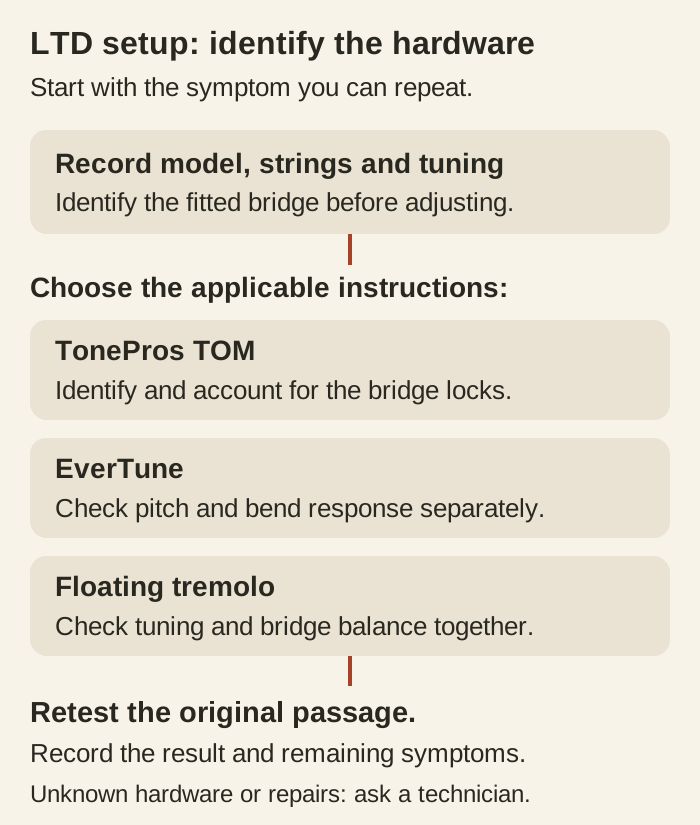
Original workflow diagram. The branches identify different procedures, not interchangeable settings.
Which LTD EC-1000 Do You Own?
Keep the complete model name, finish and any suffix in your setup notes. Match the guitar with an official listing and inspect the bridge itself. A used instrument may have replacement tuners or pickups, so the catalogue is evidence about a listed configuration rather than proof of everything currently installed.
The LTD serial number decoder can help you research its history. Do not use the decoded year as a substitute for identifying the hardware. When a shop receipt says only “EC-1000,” photographs and the more detailed manufacturer listing are particularly helpful.
Three researched EC-1000 examples
| Exact listed example | Scale / fingerboard radius | Bridge | Why the distinction matters |
|---|---|---|---|
| EC-1000, Granite Sparkle | 24.75 inches / 350 mm | TonePros locking TOM and tailpiece | Identify and release bridge locks before the applicable adjustment |
| EC-1000 EverTune, See Thru Black | 24.75 inches / 350 mm | EverTune F model | Tuning and bend response have separate controls |
| EC-1000 Baritone, Charcoal Metallic Satin | 27 inches / 350 mm | TonePros locking TOM, string-through | Treat the longer scale and full model designation as part of string planning |
Sources checked September 19, 2026: EC-1000 Granite Sparkle, EC-1000 EverTune See Thru Black, and EC-1000 Baritone. These are version-specific examples, not specifications for every guitar bearing those family names.
The first two share a listed scale and radius, but their bridge procedures differ substantially. The baritone retains the EC name while changing another important part of the instrument. None of those facts alone tells you the player's preferred string clearance.
What if you own an M, MH, H or TE?
Use the observation worksheet below, but find your own model's documentation for adjustments. Body shape and brand do not establish the bridge type. An article about an EC with a TOM bridge is not a saddle-adjustment manual for a different LTD with a tremolo.
Keep string count and modifications in the record too. A seven-string, an instrument converted to another bridge, or a guitar with unknown replacement parts needs its own assessment. You can still describe a symptom precisely without pretending that an unrelated model supplies the answer.
Start With the Symptom and a Baseline
Think back to the last time the guitar played comfortably. Did the problem follow new strings, a different tuning, a journey, a long period in storage or an adjustment? A useful timeline can reduce unnecessary work, even when it does not establish the cause by itself.
If the guitar has just arrived, use the new-guitar setup checklist and contact the seller about damage or an unexplained fault before modifying it. A good setup record also helps explain the issue clearly during a return or service conversation.
Replace “bad setup” with something reproducible
| What you notice | Record this detail | First useful distinction |
|---|---|---|
| Buzz after restringing | String, fret, tuning and whether the set changed | New tension or seating issue versus an older problem |
| A bend dies early | Starting fret, target note and string | Mechanical choking versus EverTune bend response |
| Open chords sound sharp | Chord, affected strings and fretting pressure | General tuning versus first-position behaviour |
| Action feels high everywhere | Relief and outside-string action readings | A height complaint does not isolate the bridge |
| EverTune peg turns without a pitch change | Which string and whether you are setting pitch or bend response | Normal active-zone behaviour versus an unidentified problem |
| Sound is weak only through the amplifier | Pickup selection, controls, cable and battery if fitted | Electronics versus acoustic playability |
These are starting questions rather than remote diagnoses. Do not file a nut slot or change several adjustments because one row sounds familiar. The purpose is to decide what to measure next and what to describe to a technician.
Build a compact before-and-after record
Tune the guitar to the intended pitch and put it in a stable playing position. Record the actual string set if known. If you do not know the gauges, write “unknown” and establish that information before attributing a change in feel to the neck.
| Setup note | Before | After |
|---|---|---|
| Model, finish, bridge marking | ___ | ___ |
| Date and most recent change | ___ | ___ |
| String set and tuning | ___ | ___ |
| Relief: string, held frets, measured fret, gap | ___ | ___ |
| Open-string action at fret 12, bass / treble | ___ mm / ___ mm | ___ mm / ___ mm |
| Problem passage and affected notes | ___ | ___ |
| Bridge-specific check | ___ | ___ |
| Next action or reason to leave it alone | ___ | ___ |
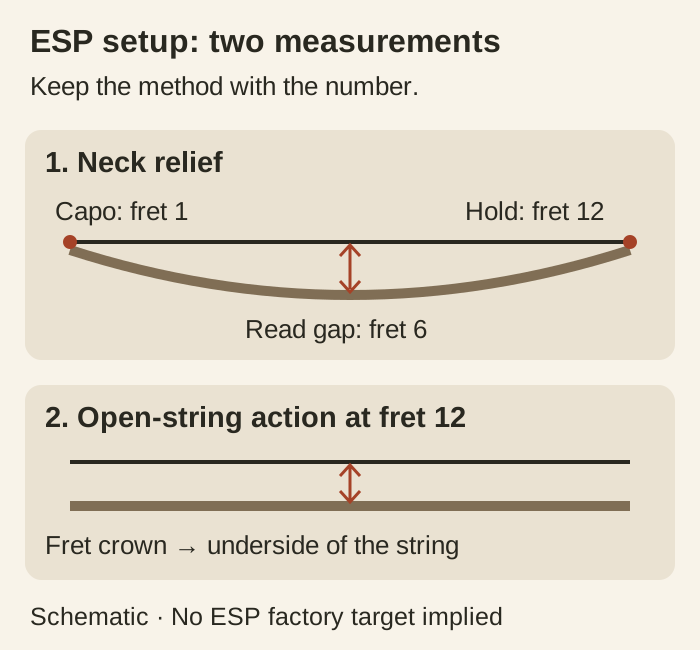
For this record, measure open-string action from fret 12's crown to the underside of each outside string, with no capo. For relief, use a named method and retain its endpoints; the ESP measurement walkthrough explains one option. Do not mix capoed and open-string action readings in the same comparison.
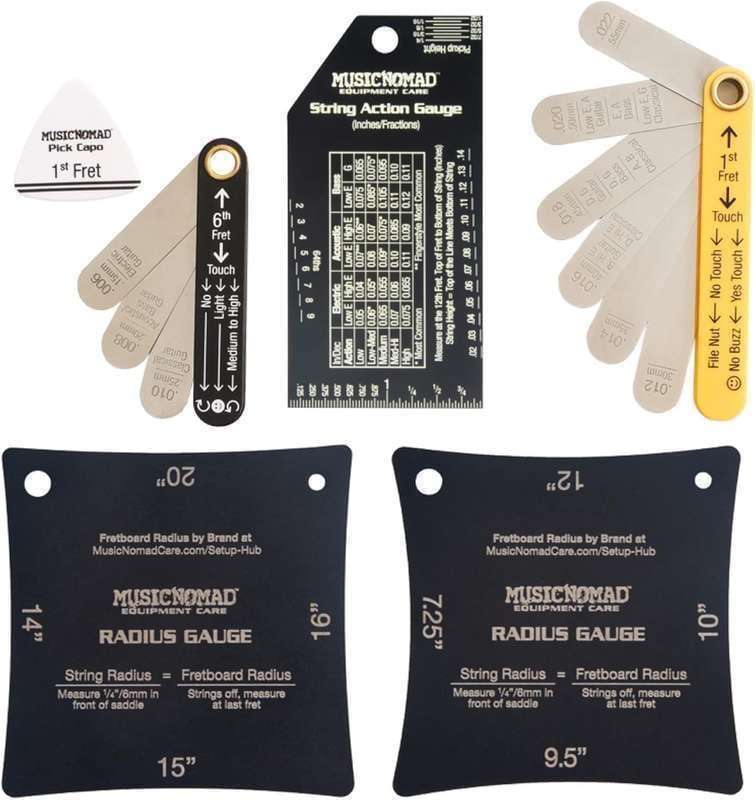
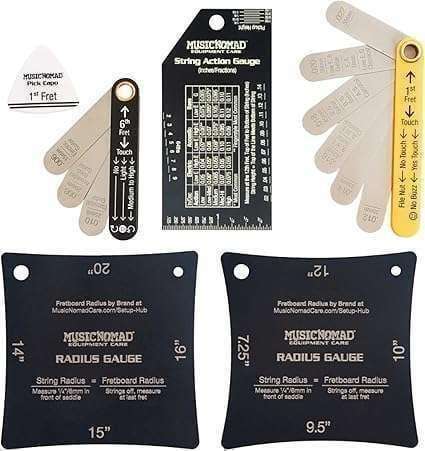
You can complete this baseline with an existing tuner and suitable gauges. The options below overlap: a full gauge set can replace separate measuring tools. Affiliate links may earn us a commission at no extra cost to you; buying every item is not part of the procedure.
Optional tools for your LTD baseline
 Buy on Amazon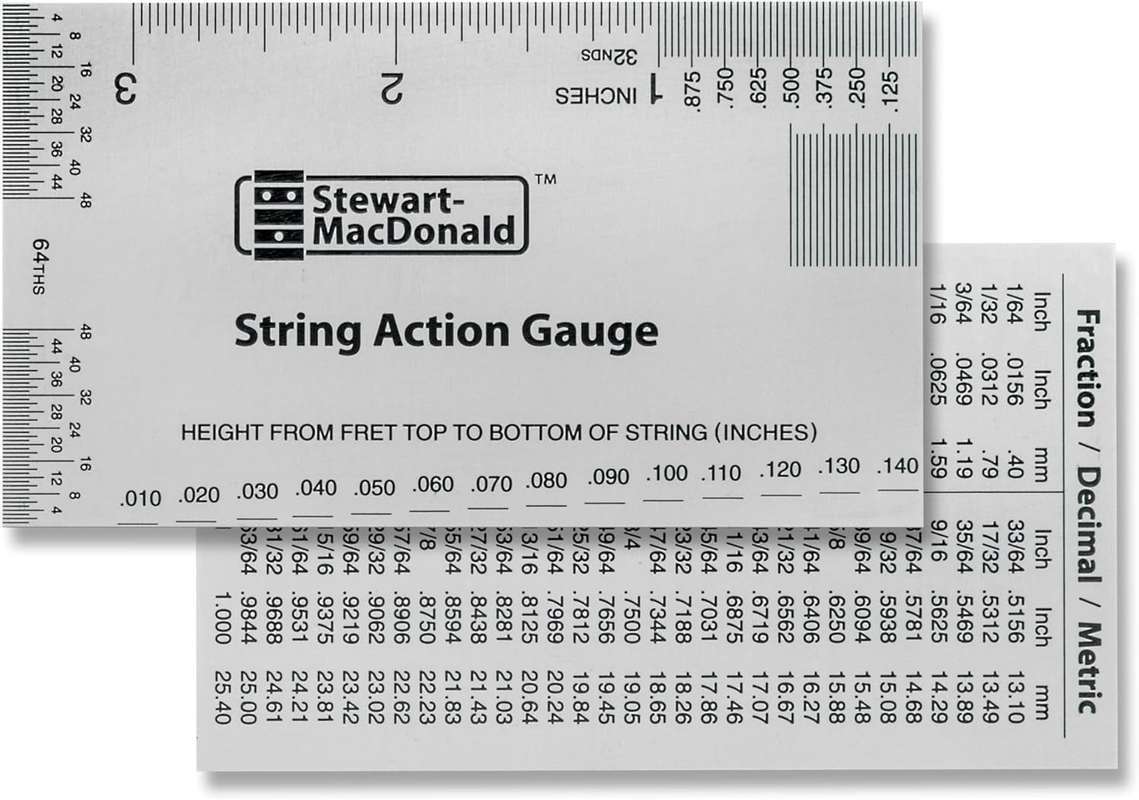
Choose the Right LTD Bridge Workflow
Find the instructions for the fitted bridge before adjusting its screws. Similar-looking controls can have different purposes. Photograph the starting position and make one supported change at a time, returning to pitch and repeating the relevant check afterward.
TonePros EC-1000: account for the locking hardware
A locking TOM bridge is still a fixed bridge; “locking” here does not mean a Floyd Rose-style locking nut. Identify the bridge locks separately from its height and saddle controls. Do not assume every screw visible around the bridge is an action adjustment.
ESP's FAQ says the TonePros lockdown screws must be released before adjustment. Follow the installed bridge's instructions for the complete procedure and correct tools. If you cannot identify the locks, ask a technician rather than applying more force to a reluctant adjuster.
Once the guitar is stable at pitch, use the recorded relief and action to explain what you want changed. If the first few chords are the main problem while the rest of the neck feels comfortable, say so. Lowering the entire bridge is not a diagnosis of first-position difficulty.
After any bridge-height work, recheck tuning and fretted-note intonation. Keep the tailpiece setting and other unrelated variables recorded. If several things change together, an improved result may be welcome, but you will have less information about which adjustment was responsible.
EverTune EC-1000: separate pitch from bend response
EverTune's quick-start instructions distinguish the active Zone 2, pitch adjustment at the bridge, and playing-position adjustment at the headstock. A peg turning without an immediate pitch change can be expected behaviour within that active range. It does not by itself mean the tuner is broken.
Use the manufacturer's diagrams to identify the correct holes and controls. Set each string's pitch and desired bend response using that procedure. EverTune also specifies rechecking playing position after adjustments because they can move a saddle within or out of its active range.
For troubleshooting, keep three separate notes: whether the open note reaches pitch, whether a fretted note stays clear, and whether a bend raises pitch as intended. Those are different observations. A string that rings cleanly but resists pitch change during bending presents a different question from one that physically chokes against a fret.
Do not chase an unfamiliar response by turning random screws. Return to the manufacturer's guide, identify the stage you are working on, and test one string. If you reach resistance or cannot establish the described behaviour, stop and ask for bridge-specific support with your model and tuning details.
A floating Floyd Rose on another LTD
If your LTD has a floating double-locking tremolo, use its own instructions rather than either EC workflow above. The Floyd Rose tuning procedure includes repeated tuning and spring-balance checks, then nut locking and fine tuning. String-gauge or tuning changes can require the system to be balanced again.
Arrange the first unfamiliar floating-bridge setup with a technician and ask for a restringing demonstration. A written record of the tuning, gauges and bridge configuration gives you something to maintain. It also prevents a routine string change from becoming an attempt to reconstruct an undocumented setup.
Plan a String Gauge or Tuning Change
Choose the musical goal first. Write the actual tuning from lowest string to highest, including whether you expect to change it frequently. “Heavy strings for metal” is less useful than a named tuning and a description of how firmly you pick and how far you bend.
Treat the manufacturer's listed string set as a reference for that exact configuration, not a compulsory choice. The Granite Sparkle EC-1000 listing specifies .010–.046, while the See Thru Black EverTune example lists .009–.042. This difference is another reason to inspect the instrument and its paperwork before assuming what is installed.
Separate a routine replacement from a new setup
Replacing a known set with the same gauges and tuning is a different task from changing both. Keep the old packet or record all six gauges before discarding it. Mixed sets are particularly easy to misremember when only the thinnest and thickest strings are written down.
If you want a different feel, explain what is uncomfortable about the existing set. Are bends tiring, picked notes moving sharp, or the lowest string difficult to control? The string-gauge guide helps frame those trade-offs, while the exact bridge and instrument determine the practical adjustment work.
A setup request should state whether preserving the previous feel or supporting a new tuning is the priority. That avoids asking for mutually unclear results, such as a large tension change with every aspect of the old response retained. Test the new arrangement before buying multiple replacement sets.
A baritone needs its own written plan
Keep the 27-inch EC-1000 Baritone separate from the shorter-scale EC examples in your notes. The model's scale does not specify a universal tuning or a suitable gauge for every player. Find the exact version's documentation and discuss your proposed set and tuning with the technician.
Record any uncertainty about the nut, available saddle travel or bridge compatibility before buying parts. These are questions to resolve on the instrument, not reasons to force an oversized string through an opening. Nut filing and other material removal belong with someone equipped to assess the fit and consequences.
Make the handover easy to follow
For example, a useful request is: “This LTD has the bridge shown in the photo. Here is the tuning I want, the string set I am considering, and the passage that currently feels loose.” That describes an intended result without pretending that a forum recipe is the correct service instruction.
Ask the technician which parts of the setup will need rechecking when you return to another tuning. Keep their answer with the guitar's record. If frequent changes are central to your playing, discuss that requirement before settling on a bridge configuration or maintenance routine.
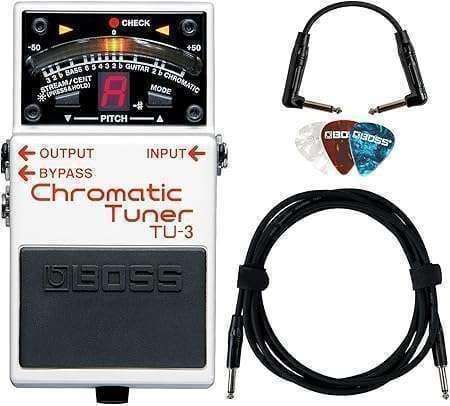
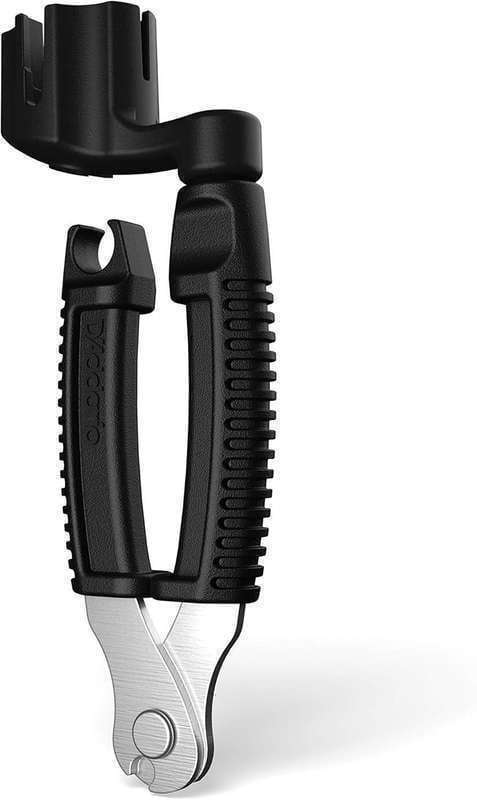
For tuning checks, choose a tuner that works with your practice setup. A clip-on and a pedal are alternatives for different situations; the string-changing tool serves a separate job. No tool below establishes a correct LTD factory target on its own.
Tuner and string-changing options

Check the Result and Prepare for Service
Repeat the original problem passage after the guitar is stable at pitch. Use the same pick, similar attack and the same amplifier settings. Start clean, then use your normal sound; this separates a change in the setup from a change in how you are listening to it.
Check open chords, notes across the neck and the bends you actually use. If a problem remains, write down the precise string and fret. “Better except for the B string at fret seventeen” is useful follow-up information, especially when the earlier measurements are alongside it.
Intonation and pickup checks are separate jobs
Compare a twelfth-fret harmonic with the fretted note using normal pressure. Retune between comparisons and note the direction of any difference. That observation helps assess intonation, but use the installed bridge's instructions before moving a saddle or releasing any lock.
Keep pickup and electronics observations separate. Test each selector position and voice control with consistent volume and gain. Verify the installed pickup model before looking for height advice; do not copy a generic clearance onto unfamiliar active electronics or direct-mounted pickups.
If the guitar feels comfortable but the amplified signal is weak, describe both facts. A technician can then investigate the appropriate system instead of lowering or raising the bridge in response to a sound problem. Similarly, a clear unplugged note that disappears through one switch position deserves its own note.
When the next step should be a technician
ESP's service guidance favours qualified technicians for truss-rod work. Stop before seized adjustments, unidentified hardware, nut filing or fret modification. You can provide valuable measurements without performing those operations yourself.
Bring the intended string set, tuning, model details and a short problem recording to the appointment. Ask for an explanation of what was changed and which checks you can maintain at home. A successful service visit should leave both a playable guitar and a clearer routine for the next string change.
Keep the completed worksheet after the work. If the same symptom returns months later, compare it with your known comfortable baseline rather than starting from someone else's action numbers. That record is especially useful when more than one guitar or tuning is in regular use.
LTD Guitar Setup FAQ
What action height should an LTD EC-1000 have?
The cited EC-1000 listings do not provide a universal factory action target. Record the method and current reading, then assess comfort, fret condition and playing technique. Do not treat the model's fingerboard radius as a substitute for a measured string-clearance specification.
Are all EC-1000 bridges adjusted the same way?
No. The researched examples include a locking TOM bridge and an EverTune system, which require different procedures. Identify the exact version and fitted hardware first. An EC-1000 model name alone is insufficient to choose adjustment instructions.
Why does turning an EverTune tuning peg not change the note?
Within the active range, the headstock control and bridge tuning control have different jobs. Identify the current setup stage using EverTune's instructions before assuming a fault. Record whether the problem concerns open-string pitch, bend response or a note physically choking.
Why did my LTD start buzzing after I changed strings?
Record whether the gauges or tuning changed and which strings and frets buzz. Check the baseline and fitted bridge before deciding on an adjustment. The timing is a useful clue, but it does not prove that the truss rod is the cause.
Can I put heavier strings on an LTD baritone?
Choose a set for the exact tuning, instrument and playing requirement, then check its fit and setup needs. A baritone label does not make every heavy set suitable. Have a technician assess nut clearance and other necessary changes before forcing a string into place.
Are locking tuners the same as a locking tremolo?
No. Locking tuners, bridge locks and a double-locking tremolo describe different hardware functions. Identify which parts your instrument has before following instructions that mention releasing locks. A photograph of the bridge and nut is helpful when asking for advice.
Should I lower the bridge when open chords feel difficult?
First compare that symptom with the rest of the neck and record relief and action. First-position difficulty does not automatically identify bridge height as the cause. Nut and fret assessment may be needed, so avoid material removal based on a remote guess.
Does the setup-specs tool now include LTD model presets?
The tool does not currently include LTD numerical model presets. This article supplies researched hardware examples and a practical workflow instead. A published guide should not be mistaken for a verified factory-specification database entry.
Where should ESP or E-II owners start?
Use the ESP guitar setup guide for Horizon NT-II and M-II examples, measurement methods and a service worksheet. It addresses a different set of model-identification questions while sharing the principle of verifying the installed hardware.
What information helps a technician fix my LTD setup?
Provide the complete model, bridge photographs, tuning, intended string set and the exact notes or passages that cause trouble. Include before measurements with their method and any recent changes. Describe the result you want rather than prescribing an unverified adjustment.