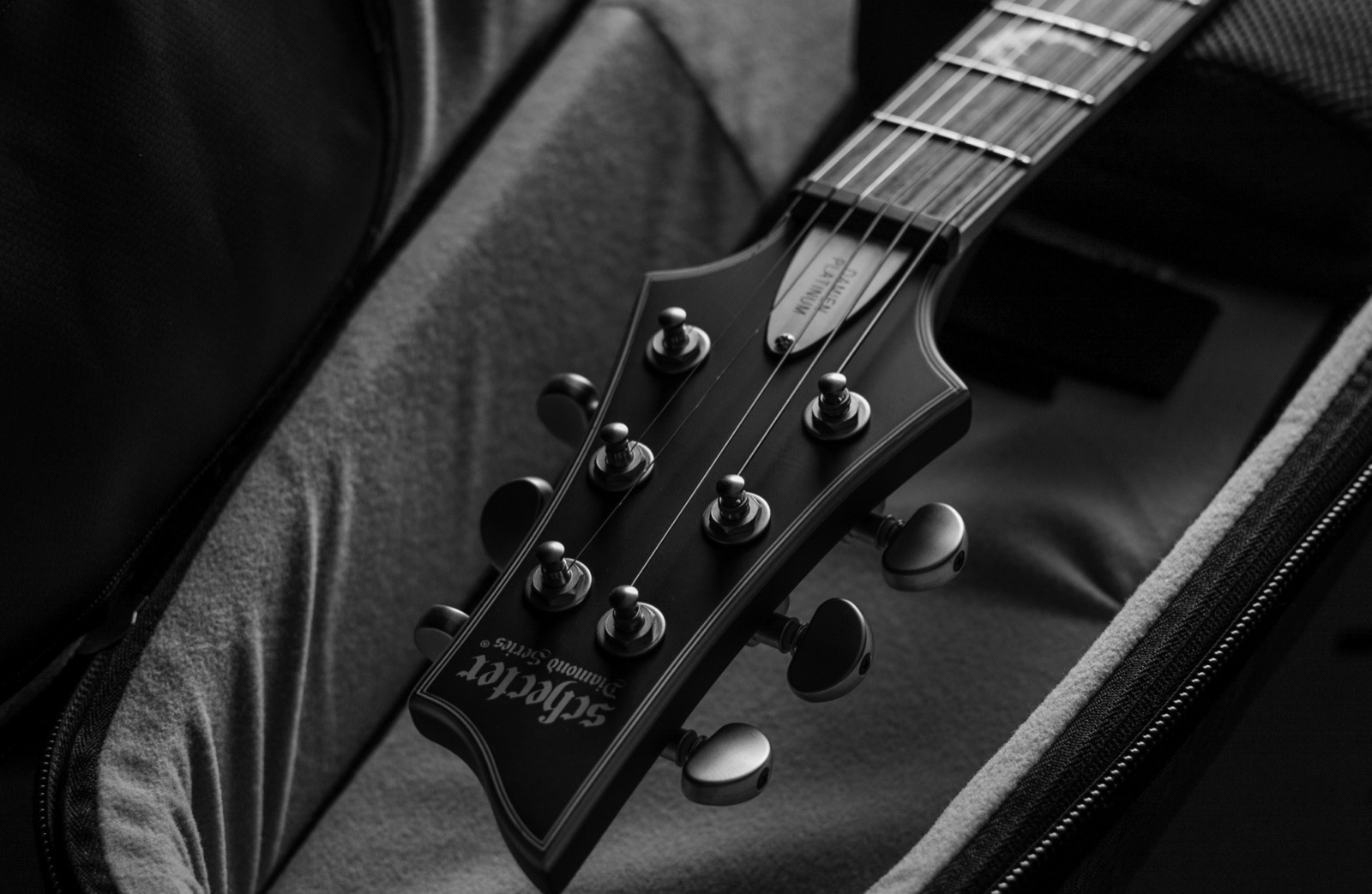
Schecter Setup Guide: Truss Rod, Action and 7-String Specs
Schecter guitar setup guide: truss rod adjustment (5/32" Allen or heel wheel), action and relief starting points, Floyd Rose, Hipshot, EverTune and multiscale.
By Nick TheodoulouUpdated

Your Schecter setup0 of 5 done
Let the neck settle before you set the string height
A bigger truss rod change keeps moving for hours, so pros leave it overnight. Re-measure the relief tomorrow, then carry on.
Your ticks are saved on this device.
On this page
- What Schecter Publishes for Each Model
- Starting Numbers for Action and Relief
- Tools for a Schecter Setup
- Step 1: Schecter Truss Rod Adjustment
- Step 2: Set Action by Bridge Type
- 7-String, 8-String and Multiscale Setups
- Step 3: Balance a Floating Floyd Rose
- Step 4: Set Pickup Height
- Step 5: Set Intonation
- Troubleshooting Schecter Setups
- FAQ
- Final Checks
- Related Posts
A Schecter guitar setup starts with a fact most owners never get told: Schecter publishes detailed spec sheets for its models, but no action or relief chart. The spec sheet does tell you the things that change the job: the scale length, the fretboard radius, the bridge, the factory strings and exactly which truss rod adjuster you have. This guide gives you those Schecter numbers, a clearly labelled starting point for action and relief, and the setup order for Floyd Rose, Hipshot, TOM, EverTune and multiscale models.
Last updated: October 23, 2026. Every number links to the manufacturer source it comes from.
Quick answer: Schecter's spec sheets list a 2-way truss rod with a 5/32" (4 mm) Allen nut on most models, or a heel-access spoke wheel on models such as the Sun Valley Super Shredder and Banshee Mach. Schecter publishes no action or relief target, so use Fender's published chart for flat boards as a starting point: 4/64" (1.6 mm) bass side and 3/64"–4/64" (1.2–1.6 mm) treble side at the 17th fret, with .008"–.010" (0.2–0.25 mm) relief. Set relief, then action, then trem balance, pickups and intonation.
What's in this guide:
- What Schecter publishes
- Starting numbers for action and relief
- Step 1: truss rod adjustment
- Step 2: action by bridge type
- 7-string, 8-string and multiscale
- Step 3: floating Floyd Rose balance
- Step 4: pickup height
- Step 5: intonation
- Troubleshooting and FAQ
Original schematic, not to scale.
What Schecter Publishes for Each Model
Schecter's product pages carry a full spec table for each guitar. Here is what a cross-section of the current range lists:
| Model (Schecter listing) | Scale | Radius | Bridge | Truss rod adjuster |
|---|---|---|---|---|
| Hellraiser C-1 | 25.5" | 14" | TonePros T3BT TOM, string-through | 5/32" (4 mm) Allen nut |
| Hellraiser C-1 FR S | 25.5" | 14" | Floyd Rose 1000 Series | 5/32" (4 mm) Allen nut |
| Hellraiser C-7 | 26.5" | 16" | TonePros 7-string TOM, string-through | 5/32" (4 mm) Allen nut |
| Hellraiser C-8 | 28" | 16" | Hipshot Hardtail (.125), string-through | 5/32" (4 mm) Allen nut |
| Omen-6 / Demon-6 | 25.5" | 14" | Tune-O-Matic, string-through | 5/32" (4 mm) Allen nut |
| Damien-7 Multiscale | 25.5"–27" | 16" | Hipshot 7-string multiscale fixed | 5/32" (4 mm) Allen nut |
| Sun Valley Super Shredder FR | 25.5" | 14" | Floyd Rose Special "Hot Rod" | Heel-access spoke wheel |
| Banshee Mach-6 EverTune | 25.5" | 12"–16" compound | EverTune F Model | Heel-access spoke wheel |
| Banshee Mach-7 EverTune | 26.5" | 12"–16" compound | EverTune F7 Model | Heel-access spoke wheel |
| PT | 25.5" | 14" | PT-H, string-through | 5/32" (4 mm) Allen nut |
Sources, checked October 23, 2026: Schecter spec pages for the Hellraiser C-1, Hellraiser C-1 FR S, Hellraiser C-7, Hellraiser C-8, Omen-6, Demon-6, Damien-7 Multiscale, Sun Valley Super Shredder FR, Banshee Mach-6 EverTune, Banshee Mach-7 EverTune and PT.
What none of those pages give is a target string height, relief or pickup height. Neither does Schecter's FAQ page, which is a set of short videos on dating, Floyd Rose restringing, finish care and switches. So the numbers in the next section are a labelled starting point from another maker, not a Schecter specification.
Not sure which model or line you own? The free Schecter serial number lookup dates Diamond Series imports and USA Custom Shop guitars. The setup order is the same for every line, including SGR models such as the C-7 SGR; only the spec sheet changes.
Starting Numbers for Action and Relief
A useful published chart for Schecter-style flat boards is Fender's, because it is indexed by fretboard radius. Fender measures string height at the 17th fret and relief at the 8th fret with a capo on the 1st fret and the 6th string held at the last fret.
| Fretboard radius (Fender chart) | Relief at 8th fret | Bass side, 17th fret | Treble side, 17th fret |
|---|---|---|---|
| 9.5"–12" | .010" (0.25 mm) | 4/64" (1.6 mm) | 4/64" (1.6 mm) |
| 15"–17" | .008" (0.2 mm) | 4/64" (1.6 mm) | 3/64" (1.2 mm) |
Source: Fender's Stratocaster setup instructions, checked October 23, 2026. These are Fender's numbers for Fender guitars, used here as a starting point because Schecter publishes none.
How to read it for your Schecter:
- 14" boards (Hellraiser C-1, Omen-6, Demon-6, PT, Sun Valley Super Shredder) sit between Fender's two rows. Start at 4/64" bass, 3/64"–4/64" treble and .008"–.010" relief.
- 16" boards (most 7- and 8-strings) fall inside Fender's 15"–17" row: 4/64" bass, 3/64" treble, .008" relief.
- 12"–16" compound boards flatten toward the top of the neck, so the 15"–17" row is the better guide at the 17th fret.
- 20" boards (the Damien-8 Multiscale and Reaper-7 Multiscale, spec pages checked October 23, 2026) are flatter than anything on Fender's chart. Use the 15"–17" row and expect to adjust by feel.
Fender's own advice applies too: players with a light touch can go lower, and others need more height to avoid rattles.
Tools for a Schecter Setup
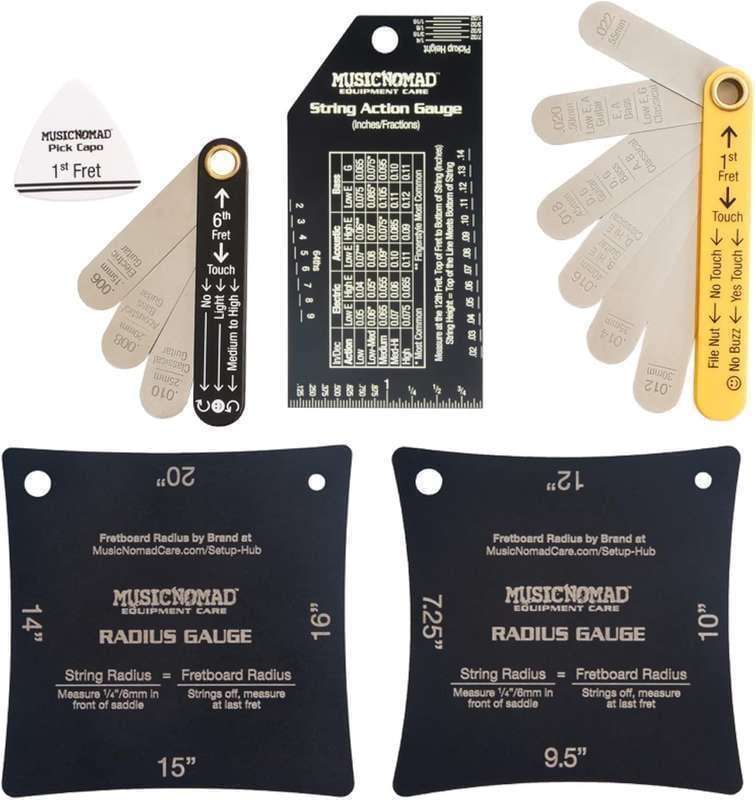
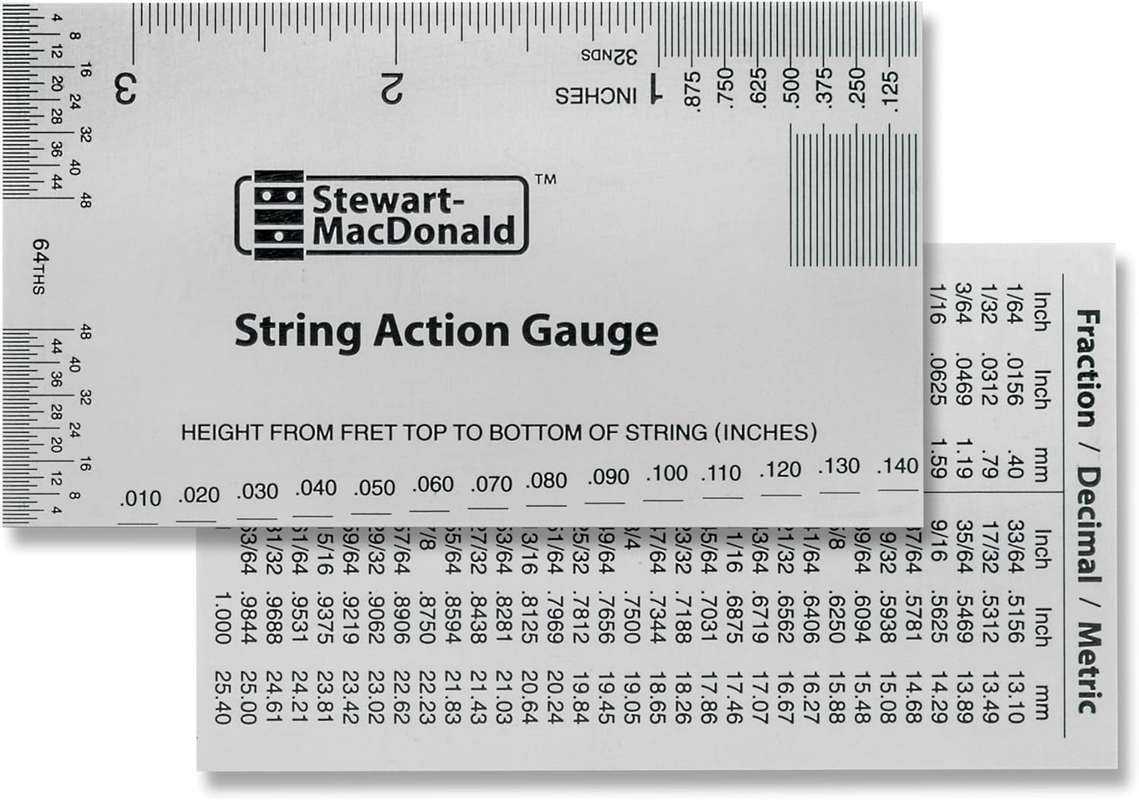
You need a 5/32" or 4 mm Allen key for most Schecter truss rods (or the right tool for a spoke wheel), a feeler or relief gauge, an action rule that reads in 64ths or millimetres, a capo and an accurate tuner. Affiliate links may earn us a commission at no extra cost to you.
Tools for a Schecter setup
 Buy on Amazon

Step 1: Schecter Truss Rod Adjustment
Relief comes first, because every action reading depends on it. Tune to pitch, capo the 1st fret, hold the lowest string at the last fret, and slide a feeler gauge under it at the 8th fret. That is Fender's method; use it every time so your readings stay comparable.
Every Schecter spec sheet we checked that names the rod lists a 2-way adjustable rod. Fender's description of its own two-way design, the Bi-Flex rod, explains what that buys you: unlike a standard rod, it can correct a neck that is too concave or too convex.
5/32" (4 mm) Allen nut
This is the adjuster listed on the Hellraiser, Omen, Demon, Damien, Reaper-6, PT and most of the 7- and 8-strings above. Use a key that fits the nut fully before turning.
Heel-access spoke wheel
The Sun Valley Super Shredder, Banshee Mach and PT Classic list a spoke wheel at the heel instead, so you can adjust relief without removing anything.
Which way to turn
Fender gives the same rule for an adjuster at the headstock and one at the neck joint: facing the adjuster, turn clockwise to remove relief and counter-clockwise to add it. At a heel wheel you face it from the body end, so make one small turn, retune and re-measure to confirm the direction before going further. Keep turns small and re-check the gap after each one. Fender says to stop and see a technician if a rod meets excessive resistance, needs constant adjustment or has no effect. Our truss rod adjustment guide covers the warning signs in more detail.
Step 2: Set Action by Bridge Type
Tune to pitch and measure from the top of the 17th fret to the underside of the two outer strings. How you raise or lower them depends on the bridge your spec sheet lists. Our action height guide covers rulers and reading technique.
Floyd Rose (Hellraiser FR, Sun Valley Super Shredder, Damien FR)
The Hellraiser C-1 FR S lists a Floyd Rose 1000 Series; the Sun Valley Super Shredder FR and Damien-6 FR list a Floyd Rose Special "Hot Rod".
On a locking trem, Fender notes that individual string heights are preset, so you set overall height at the two pivot screws. Floyd Rose's tuning instructions call for a 3 mm Allen wrench on those screws and warn that the adjustment slightly changes your tuning. Move both sides evenly, retune and re-measure.
TonePros and Tune-O-Matic (Hellraiser C-1 and C-7, Omen-6, Demon-6)
Height is set at the two bridge posts. The Hellraiser C-1 lists a TonePros T3BT, a locking TOM. ESP's support FAQ, written for the TonePros locking TOMs on its own guitars, says to loosen the two lock-down screws with a 1.5 mm Allen wrench before adjusting action height. Check whether your TonePros has them, and re-lock them when you are done.
Hipshot and Schecter hardtails (Hellraiser C-8, multiscales, Reaper, Damien)
Fixed bridges with individual saddles let you set each string. Set the two outer strings to your target first, then bring the middle strings into an even curve that follows the board's radius. Retune after every change, because moving a saddle knocks its string out of tune.
EverTune (Banshee Mach EverTune)
EverTune's quick start puts each saddle in its active Zone 2 first: slacken the headstock peg, tighten it until the pitch holds steady while you pluck, then two more half turns. Tune at the bridge with the hex key, set playing position at the peg, and only then adjust action (the hex screw on top of the bridge) and intonation, resetting playing position after each. EverTune says those usually only need setting once unless you change string gauge or tuning. Our LTD setup guide has more EverTune troubleshooting.
If the low string buzzes at your target height, do not keep dropping the bridge. Check relief, then look for a high fret; the fret buzz guide walks through the diagnosis.
7-String, 8-String and Multiscale Setups
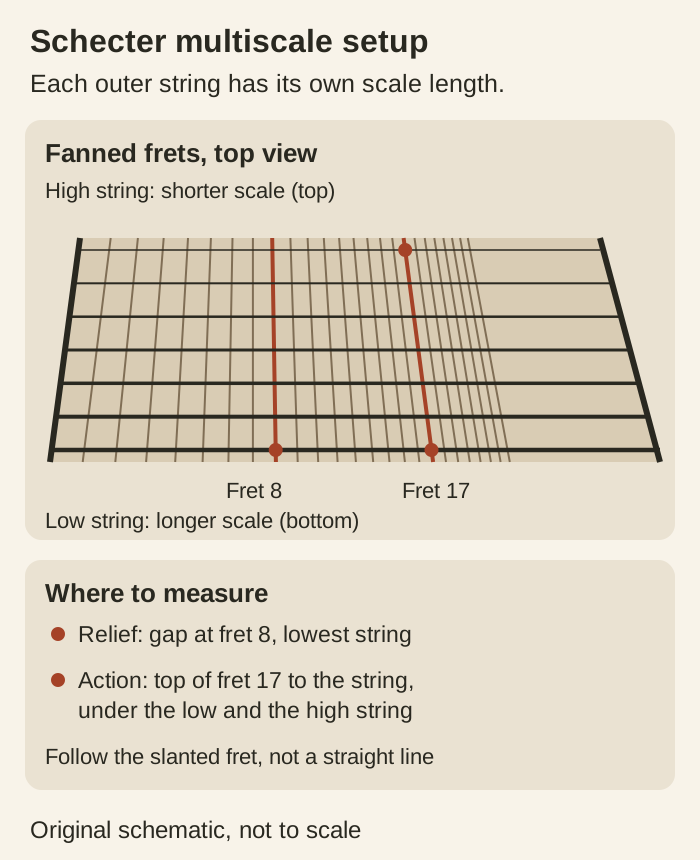
Extended-range Schecters change three things: the scale, the radius and the strings. The Hellraiser C-7 lists a 26.5" scale and 16" radius, the Hellraiser C-8 a 28" scale, and the Damien-7 Multiscale a 25.5"–27" fanned scale. Factory strings go up to a .062 low string on the 7-strings and .080 on the 8-strings.
Measure each outer string at its own fret
On a multiscale (Schecter calls them Multiscale or MS), the frets are slanted, so the 17th fret sits in a different place under the low string than under the high one. Measure action under both outer strings at their own 17th fret, following the slanted fret wire. Relief works the same as on a straight-fret neck: capo, hold the lowest string at the last fret, and read the gap at the 8th fret under that string.
Give the low strings room
Fender's chart is written for six-strings. A .062 or .080 string at low tuning swings wider than a six-string's low E, so start the lowest string at the 4/64" bass-side figure and raise only that side until it stops rattling against the frets.
Know your factory strings
| Guitar type (Schecter listing) | Factory strings |
|---|---|
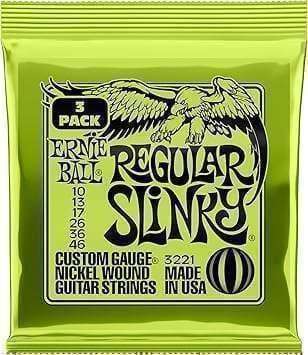
| Most 6-strings (Hellraiser C-1, Omen-6) | D'Addario NYXL 1046 (.010–.046) |
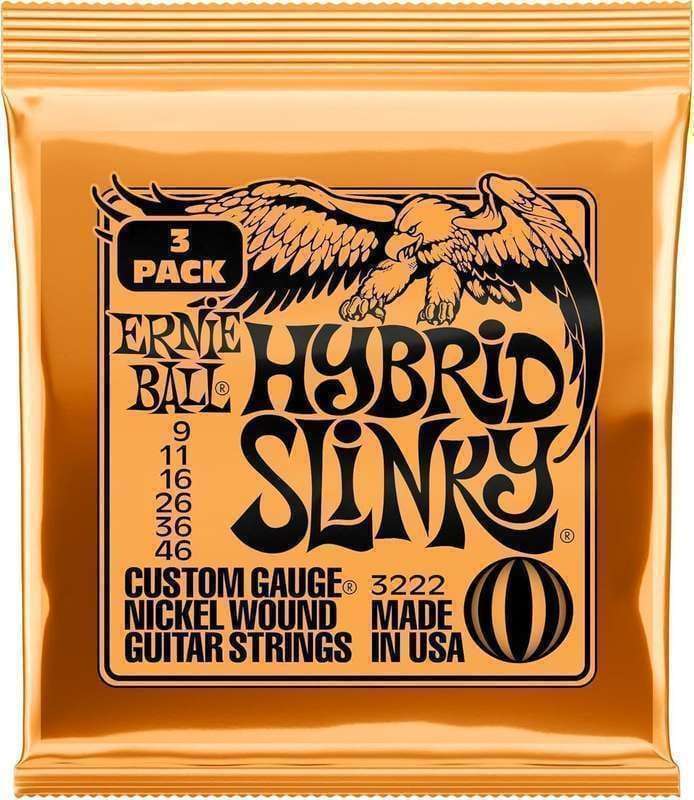
| Sun Valley Super Shredder | Ernie Ball Hybrid Slinky 2222 (.009–.046) |
| 7-strings (Hellraiser C-7, Damien-7) | D'Addario NYXL0962 (.009–.062) |
| 8-strings (Hellraiser C-8, Demon-8) | D'Addario NYXL0980 (.009–.080) |
| PT EX baritone (27" scale) | D'Addario NYXL1260 (.012–.060) |
Sources: the Schecter spec pages linked above, plus the Demon-8 and PT EX, checked October 23, 2026.
Moving to heavier strings for drop or baritone tunings changes the tension on the neck, so recheck relief first and then action. If a thicker low string will not sit in its nut slot, that is a job for a technician. Our string gauge guide helps you pick a set.
Schecter factory-gauge 6-string sets

Step 3: Balance a Floating Floyd Rose
A floating Floyd balances string tension against spring tension. Floyd Rose's goal is the base plate parallel to the top of the guitar with every string at pitch:
- Unclamp the three nut clamps and set the fine tuners to the middle of their range.
- Tune every string with the headstock tuners, starting from the low string.
- Re-check the low string. Each string you tune pulls the others the opposite way, so Floyd Rose says to tune slightly sharp or flat to compensate, and repeat until all hold pitch.
- Look at the plate from the side. Tilted forward, away from the body: tighten the claw screws clockwise. Tilted back toward the body: loosen them counter-clockwise. Retune after each change.
- When the plate is parallel and the strings are at pitch, clamp the nut and finish with the fine tuners only.
Floyd Rose says the spring step is needed at first setup, or whenever you change string gauge or tuning. Drop a Hellraiser FR to D standard and the plate will need rebalancing. Schecter's FAQ page has a short video on restringing a Floyd Rose, and our Ibanez Edge tremolo guide covers the same balancing logic on another locking trem.
A Floyd has no per-string height screws. Floyd Rose's saddle height notes say its six-string systems are 10" radius with the preinstalled shim and 12" without, and that matching a different radius means shimming individual saddles. On a 14" Schecter board, check whether the middle strings sit noticeably higher than the outer ones before deciding anything needs shimming.
Step 4: Set Pickup Height
Hold the strings at the last fret and measure from the top of the pole piece to the underside of the outer strings. Schecter does not publish pickup heights, so here are the best-sourced starting points:
- Passive humbuckers (most Schecter Diamond and USA pickups): Fender's chart lists humbuckers at 4/64" (1.6 mm) on both sides, as a starting point that varies with magnetic pull. Fender's rule of thumb: the most room under the low string at the neck pickup, the least under the high string at the bridge.
- EMG actives (Hellraiser, Sun Valley Super Shredder): we could not verify a published EMG figure to cite. Jackson's factory spec sheet, from another maker that fits EMGs, says "as close as desired" while allowing for string vibration.
- Fishman Fluence (the Avenger FR-S bridge pickup): Fishman's Fluence user guide gives no number but says height changes affect feel, response and output, and that setting them too close can pull the strings.
On extended-range guitars, check the lowest string separately. Fender's factory spec page notes, for basses, that larger gauges need wider vibration allowance under the pickups, and a .062 or .080 guitar string deserves the same allowance.
Step 5: Set Intonation
Intonation goes last, because relief, action and trem balance all change it. Compare the 12th-fret harmonic with the fretted 12th-fret note on each string. Fender's rule: if the fretted note is sharp, lengthen the string by moving the saddle back; if flat, move it forward. Retune and repeat.
On a Floyd Rose, loosen the saddle lock screw before sliding the saddle, and remember that retuning with the headstock tuners means unclamping the nut first. On an EverTune, the quick start sets intonation with the rear screws and then resets playing position. Our intonation checker works one string at a time.
Troubleshooting Schecter Setups
The truss rod will not turn. Check the key fits fully: Schecter lists 5/32" (4 mm) for its Allen nuts. If it still resists, stop. Fender advises a technician whenever a rod meets excessive resistance or has no effect.
The action will not come down on a Hellraiser. Check the TonePros lock-down screws are loose before turning the posts.
The Floyd will not return to pitch after a dive. Floyd Rose's troubleshooting tips start with the clamps: nut clamp screws, string clamps and saddle intonation screws should all be tight. If it still drifts, Floyd Rose says the knife edges may be damaged, a job for a repairer.
The low B or F# rattles but the rest is fine. Raise that side a little rather than adding relief to the whole neck.
The fine tuners have run out. Unclamp the nut, reset the fine tuners to mid-range, and repeat the Floyd Rose tuning steps.
FAQ
Does Schecter publish factory action and relief specs?
Not that we could find. Schecter's spec sheets list scale, radius, bridge, truss rod type and factory strings, and its FAQ page is a set of short videos, but neither gives action, relief or pickup-height targets (checked October 23, 2026). Fender's published radius chart makes a good labelled starting point.
How do I adjust the truss rod on a Schecter?
Check your spec sheet for the adjuster. Most Schecters list a 2-way rod with a 5/32" (4 mm) Allen nut; some list a heel-access spoke wheel. Facing the adjuster, clockwise removes relief and counter-clockwise adds it. Make small turns, retune and re-measure at the 8th fret.
What size Allen key fits a Schecter truss rod?
Schecter's spec sheets list a 5/32" (4 mm) Allen nut on most models, including the Hellraiser, Omen, Demon, Damien and PT. Models with a heel-access spoke wheel, such as the Sun Valley Super Shredder and Banshee Mach, need a tool that fits the wheel instead.
What action height should a Schecter have?
Schecter does not publish one. Fender's chart for flat boards is a good start: 4/64" (1.6 mm) on the bass side and 3/64"–4/64" (1.2–1.6 mm) on the treble side at the 17th fret. Light players can go lower; heavy pickers usually need more.
How much neck relief should a Schecter have?
Fender's chart gives .010" (0.25 mm) for 9.5"–12" boards and .008" (0.2 mm) for 15"–17" boards, measured at the 8th fret with a capo at the 1st fret and the string held at the last fret. Schecter's common 14" boards sit between those rows.
How do I measure action on a multiscale Schecter?
Measure under both outer strings at their own 17th fret, following the slanted fret wire. Because each string has a different scale length, the measuring point moves across the board. Read relief at the 8th fret under the lowest string.
Do 7- and 8-string Schecters need higher action?
Often on the low side. Schecter's 7-strings ship with up to a .062 low string and its 8-strings with a .080, which swing wider than a six-string's low E. Start at 4/64" and raise only the low side until it stops rattling.
How do I set up the Floyd Rose on a Schecter?
Unclamp the nut, centre the fine tuners, tune with the headstock tuners, then adjust the claw screws until the base plate is parallel to the body. Floyd Rose uses a 3 mm Allen wrench on the two pivot screws for action. Rebalance after any gauge or tuning change.
How high should EMG pickups be on a Schecter?
Neither Schecter nor any EMG material we could verify gives a number. Jackson's factory spec, from another maker that fits EMGs, says they can sit as close as desired while allowing for string vibration. Leave enough room that the strings never touch the pickup when you dig in.
What strings does Schecter put on its guitars?
Most current 6-strings list D'Addario NYXL 1046 (.010–.046). The Sun Valley Super Shredder lists Ernie Ball Hybrid Slinky (.009–.046), 7-strings list NYXL0962 (.009–.062) and 8-strings list NYXL0980 (.009–.080).
Final Checks
Read your model's spec sheet first, set relief, then action, then the trem, pickups and intonation. Change one thing at a time and retune after every adjustment. Buying or selling a Schecter? Date it with the free Schecter serial number lookup and get a Guitar Valuation Report.
Related Posts
Locking Trem and Superstrat Guides
- Ibanez Edge Tremolo Setup — balance and troubleshooting on another locking trem
- ESP Guitar Setup — fixed and Floyd Rose ESP examples
- LTD Guitar Setup — EverTune and EC-1000 troubleshooting
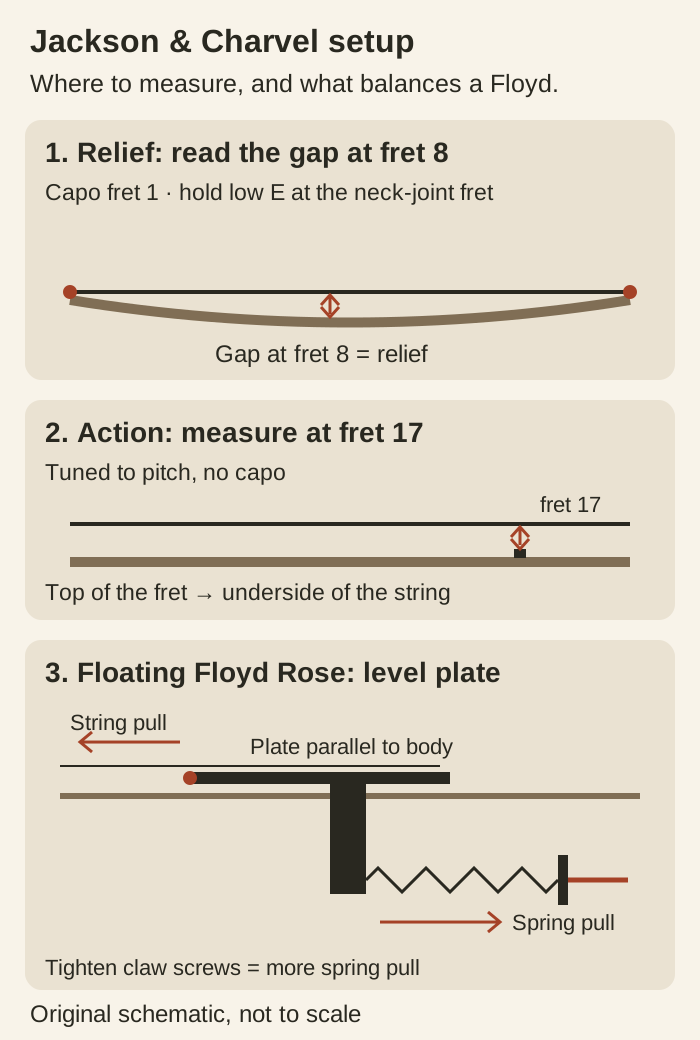
- Jackson and Charvel Setup — Jackson's published factory specs and Floyd Rose balancing
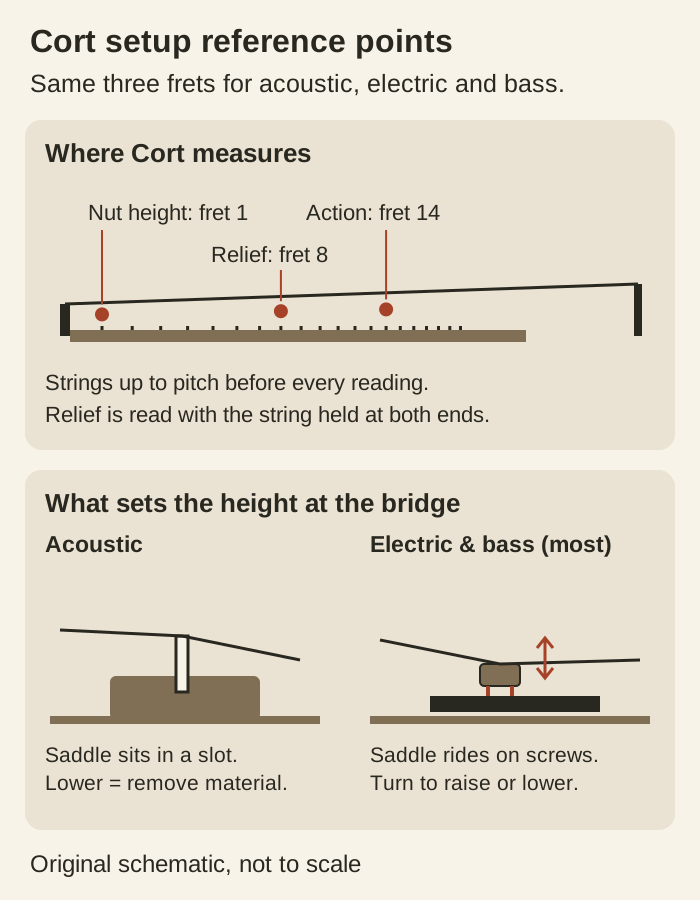
- Cort Setup Guide — Cort's factory specs for G, KX and X electrics
- Schecter Serial Number Lookup — date your Schecter
Universal Setup Guides
- Guitar Truss Rod Adjustment — neck relief for all guitars
- Guitar Action Height Guide — measure and set string height
- Fret Buzz Troubleshooting — find the cause before you adjust
- Guitar String Gauges — choose a set for drop and baritone tunings
🛠️ Done with this setup? Log the spec — action, relief, strings — in My Gear Garage so you remember exactly what you did in six months. Free, no password — magic-link sign-in.