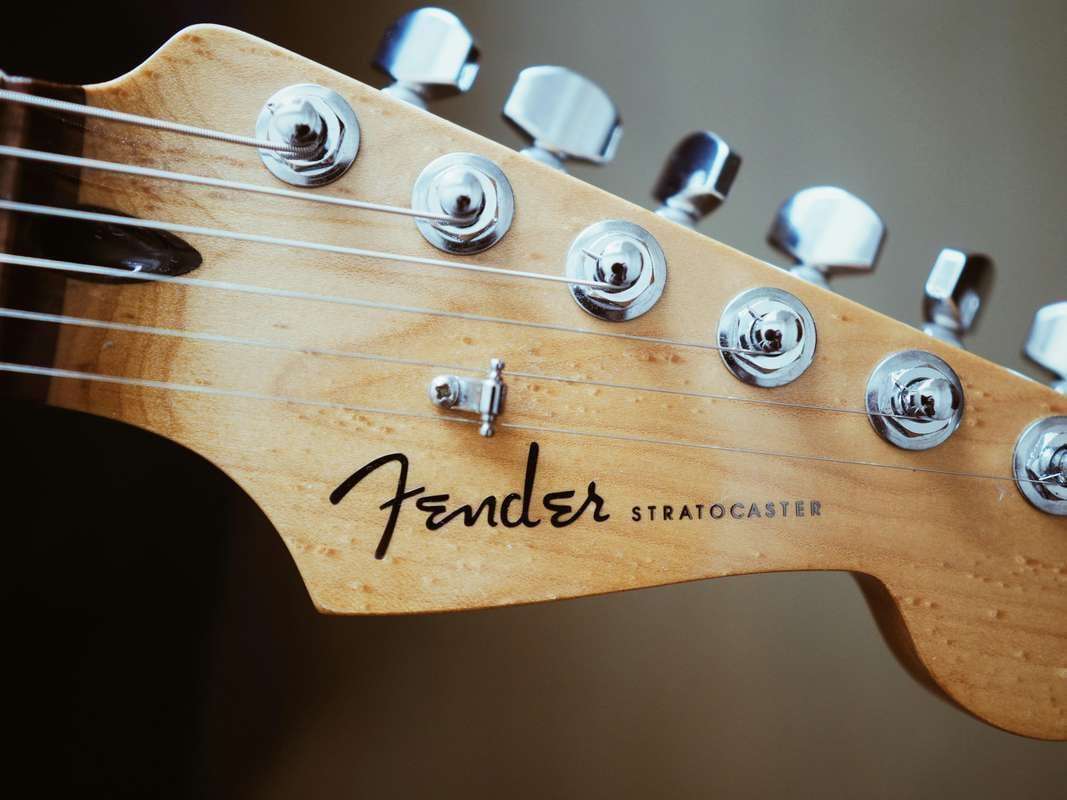
Fender Tuners Identification Guide: Kluson, Stamped & Vintage
Identify Fender tuners by era: Kluson double-line, single-line, F-stamped, Schaller, Gotoh, and modern tuners. Learn to spot originals, reproductions, and value impact.
Fender Tuners Identification Guide: Kluson, Stamped & Vintage
Fender tuners identification is one of the fastest ways to narrow down when a guitar was built and whether its hardware is still original. The tuning machines on a Stratocaster, Telecaster, Jazzmaster, Precision Bass, or Jazz Bass changed repeatedly between the 1950s and today. Each major style — Kluson, Fender-stamped, Schaller, Gotoh, and modern sealed units — carries visual clues that point to a specific era and factory.
This guide walks you through every common Fender tuner style on vintage, used, and reissue instruments. You will learn how to read the markings, measure the posts, spot reproductions, and understand how original tuners affect value. Pair it with the free Fender serial number decoder for a full year-and-country read.
Why Tuners Matter for Dating and Value
On a vintage Fender, tuners are a timestamp. Because Fender changed tuner suppliers at known moments, the tuners can confirm or contradict the serial number, neck date, and decal story. A 1962 Stratocaster should have Kluson double-line tuners. A 1975 Telecaster should have F-stamped tuners. A 1984 Japanese Fender will usually show Gotoh units.
When the tuners match the rest of the guitar, that is strong evidence of originality. When they do not, ask why. A previous owner may have replaced a broken tuner, or a seller may have mixed parts to raise the price. Knowing how to identify Fender tuners protects you from overpaying and helps you describe your own instrument accurately.
Original tuners also affect resale value. Collectors want the exact buttons, stampings, and patina that left the factory. Even one replacement tuner can push a guitar from collector-grade into player-grade pricing.
Kluson Tuners: The Pre-CBS Standard
From the early 1950s through the mid-1960s, Fender relied on Kluson Manufacturing for most of its tuning machines. The quickest way to recognize a Kluson is the stamped metal back cover.
Kluson Deluxe Double-Line Tuners
Double-line Kluson tuners are the holy grail for pre-CBS collectors. The back plate reads "KLUSON DELUXE" on the top line and "PATENT APPLIED FOR" on the bottom line. The buttons are usually white or cream plastic, and the thin nickel or chrome plating ages to a soft, slightly yellowed sheen.
These tuners use a riveted post design with a simple worm-and-gear mechanism. On a Stratocaster, Telecaster, or Esquire, you will see six in a row on the headstock back. The double-line stamp is the clearest identifier, but the button shape and slightly domed cover plate also help confirm the era. Fender used double-line Klusons on most USA instruments from about 1954 through 1965.
Kluson Deluxe Single-Line Tuners
Around 1965, Kluson shifted to a simpler stamping: just "KLUSON DELUXE" in a single line. Collectors call these single-line tuners. They are mechanically similar to the double-line version, but the patent wording disappeared from the stamp.
Single-line Klusons are common on CBS-era Fenders from 1965 through about 1967. They are correct for the era but do not command the same premium as double-line examples. The button material often shifted from celluloid to a harder plastic, so small cracks and yellowing are normal aging signs on originals.
Fender Stamped Tuners: The CBS Era
By 1967, Fender began moving away from visible Kluson branding. The back cover carried the Fender "F" logo or the word "FENDER" instead of the Kluson name. These are usually called F-stamped tuners or Fender stamped tuners.
The F-stamped tuner is one of the most common vintage Fender tuners you will find. It has the same basic shape as a Kluson single-line tuner, but the plate reads "FENDER" in a straight line. Some versions also include a small "F" logo near the post.
Fender stamped tuners appeared on USA production from roughly 1967 through the late 1970s. They are correct for CBS-era Strats, Teles, Jazz Basses, and Precision Basses. The buttons are usually cream or white plastic, and the plating is chrome rather than nickel. Because these tuners were produced in huge numbers, they are still affordable as replacement parts — which means sellers sometimes add them to earlier guitars.
F-stamped tuners use the same two-screw footprint as Kluson Deluxe tuners, so they swap directly onto a vintage headstock. That makes them convenient replacements, but it also makes it harder to spot a mismatch just by looking at screw holes. Always check the back plate stamp and button style against the guitar's claimed year.
Schaller Tuners: The 1970s Heavy-Duty Choice
In the 1970s, Fender started using Schaller tuning machines on some higher-end USA instruments and basses. Schaller tuners are heavier than Kluson-style units, with a thicker cast housing and a larger button.
You can identify Schaller tuners by the "SCHALLER" stamp on the back plate and the larger, squarer metal housing. The buttons are often pearloid or plastic, and the posts are thicker. On basses, Schaller tuners are especially common because they handle higher string tension better than lighter Kluson-derived designs.
Schaller tuners are generally associated with late-CBS and early-FMIC guitars from the late 1970s through the early 1980s. A 1978 Stratocaster with Schaller tuners is period-correct, but a 1962 Stratocaster with Schallers is not.
The mounting footprint for Schaller tuners is different from Kluson-style tuners. Enlarged holes or filled screw positions on a headstock are signs that a previous owner drilled for Schallers and then swapped back. Those modifications affect value.
Gotoh Tuners: Japanese Fenders
Fender Japan used Gotoh tuners on many of its 1980s instruments. Gotoh is a Japanese manufacturer known for high-quality, precise tuning machines, and Fuji-Gen-built Fenders from the JV, SQ, and E-series years often carried Gotoh units.
Gotoh tuners on Japanese Fenders are usually sealed units with "GOTOH" stamped on the back housing. The styling is more modern than vintage Klusons, with smoother lines and often a higher gear ratio.
If you are inspecting a 1980s Japanese Fender, Gotoh tuners are a good sign of originality. An E-series guitar with Gotoh tuners and a "Made in Japan" decal is almost certainly a Fuji-Gen instrument, not a USA Corona build. For more on Japanese serial numbers, see the Fender serial number decoder and neck date vs serial number guide.
Modern Fender Tuners
From the 1980s onward, Fender standardized on sealed tuning machines across most product lines. Modern tuners have a solid metal housing with no visible back plate, and the gearing is fully enclosed.
Player Series guitars often use Fender-branded sealed cast/sealed tuners. American Professional and American Ultra instruments may use short-post locking tuners. Vintage reissue models usually return to Kluson-style reproduction tuners with the correct stampings.
The key identification point is the absence of a removable back cover. If you turn the guitar over and see a smooth, enclosed housing with the Fender logo or no visible branding, you are looking at a sealed modern tuner.
Spotting Reproduction and Replacement Tuners
The vintage tuner market is full of reproduction parts. Here is how to separate an original from a copy.
Check the Stamping Depth and Font
Original Kluson and Fender stampings have a consistent depth and slightly irregular letters from machine stamping decades ago. Modern repros often look too clean, too deep, or too perfectly aligned. Under magnification, repro edges look sharp and fresh, while originals have softened edges from age.
Look for Patina and Wear
Original tuners develop a specific patina. Nickel plating turns slightly yellow or brown. Chrome plating can show tiny cracks or clouding. Buttons yellow, shrink, or crack in ways that are hard to fake quickly. If a "vintage" guitar has bright, mirror-shiny tuners with pristine white buttons, be skeptical.
Compare the Button Shape and Footprint
Pre-CBS celluloid buttons are often slightly translucent and develop a creamy color. Later hard-plastic buttons are more opaque. Repro buttons sometimes feel harder or look too white.
If the screw holes do not line up with expected Kluson or Schaller spacing, the tuners have been replaced or the headstock modified. Extra holes, filled holes, or shifted positions are red flags.
For a broader authenticity checklist, use the free Fender fake checker.
Tuner Specs and Measurements
When you are trying to identify or replace Fender tuners, a few measurements matter.
| Tuner Style | Era | Back Plate Marking | Post Diameter | Button Material |
|---|---|---|---|---|
| Kluson Deluxe Double-Line | c. 1954–1965 | "KLUSON DELUXE" / "PATENT APPLIED FOR" | ~6 mm (0.236 in) | Celluloid cream/white |
| Kluson Deluxe Single-Line | c. 1965–1967 | "KLUSON DELUXE" | ~6 mm | Plastic cream/white |
| Fender Stamped (F-stamped) | c. 1967–late 1970s | "FENDER" | ~6 mm | Plastic cream/white |
| Schaller | c. late 1970s–early 1980s | "SCHALLER" | ~8 mm (0.315 in) | Pearloid/plastic |
| Gotoh | c. 1982–1990s | "GOTOH" | ~6–8 mm | Plastic/metal |
| Modern Sealed | 1980s–present | Fender logo or unbranded | Varies | Plastic/metal |
The post diameter is especially important if you are buying replacement bushings. Vintage Kluson-style posts are roughly 6 mm, while Schaller posts are closer to 8 mm. Using the wrong bushing will leave the post loose or force you to enlarge the headstock hole.
The gear ratio also differs. Vintage Kluson tuners typically have a 12:1 or 14:1 ratio. Modern sealed tuners are often 18:1, which feels smoother and more precise. You cannot see the ratio from the outside, but you can feel it when you turn the button.
Value Impact of Original Tuners
Original tuners can add or subtract hundreds of dollars from a vintage Fender's value.
Collector-Grade Originality
A pre-CBS Stratocaster or Telecaster with all six original double-line Kluson tuners is worth more than the same guitar with a mix of originals and repros. Missing tuner tips, replaced buttons, or mismatched back plates all reduce the premium.
Player-Grade Instruments
For a player guitar, originality matters less. A 1973 Telecaster with one replaced F-stamped tuner is still a great guitar. The value hit is smaller than on a pre-CBS instrument, but the replacement should still be disclosed.
Bass Tuners
Original tuners on vintage Precision Basses and Jazz Basses are especially important because correct 1950s and 1960s bass tuners are harder to find than guitar tuners. A 1962 Precision Bass with its original reverse-winding tuners commands a noticeable premium over one with later replacements.
For current market ranges, see the Fender Stratocaster value guide and Fender Telecaster value guide.
Setup and Maintenance Tips
Vintage tuners can work beautifully if they are serviced properly. The most common problem is dried-out grease in the gear housing, which makes the tuner feel stiff or gritty.
To clean vintage open-back tuners, remove them from the headstock and use a small brush to remove dust and old grease. Apply a tiny amount of light machine oil or tuner-specific lubricant to the gear teeth and worm, then work the button until the action feels smooth. Do not over-oil, because excess lubricant attracts dust.
If a tuner is loose, check the bushing first. Vintage bushings can compress or crack. Make sure the post diameter matches — a 6 mm Kluson bushing will not fit an 8 mm Schaller post.
For factory-correct setup measurements by model and year, use the Setup Specs Lookup or grab the printable Fender Setup Guide.
Internal Links and Next Steps
- Fender Serial Number Lookup — Decode any Fender or Squier serial instantly
- Fender Authenticity Check — Free red-flag checklist for suspicious guitars
- Pre-CBS Fender Serial Numbers — 1954–1964 dating and value guide
- CBS-Era Fender Serial Numbers — 1965–1985 dating and value guide
- Vintage Stratocaster Identification — Visual markers by era
- Vintage Telecaster Identification — Visual markers by era
- Fender Neck Date vs Serial Number — When the dates disagree
- Fender Stratocaster Value Guide — Market values by year and condition
- Fender Telecaster Value Guide — Market values by year and condition
- Fender Setup Guide — Printable factory specs by model and era
FAQ
What tuners came on pre-CBS Fender guitars?
Pre-CBS Fenders typically used Kluson Deluxe double-line tuners. The back plate is stamped with "KLUSON DELUXE" and "PATENT APPLIED FOR." These are correct for most USA Strats, Teles, Jazzmasters, and Jaguars from about 1954 into 1965.
How can I tell Kluson double-line from single-line tuners?
Turn the guitar over and read the back plate. Double-line tuners have two lines of text: "KLUSON DELUXE" and "PATENT APPLIED FOR." Single-line tuners show only "KLUSON DELUXE" on one line. Double-line tuners are older and generally more valuable.
What are Fender F-stamped tuners?
F-stamped tuners are CBS-era tuning machines with "FENDER" stamped on the back plate instead of the Kluson name. They appeared on USA Fenders from roughly 1967 through the late 1970s and are a common, period-correct vintage tuner style.
Did Fender ever use Schaller tuners from the factory?
Yes. Fender used Schaller tuners on some late-CBS and early-FMIC guitars from the late 1970s into the early 1980s. Schaller tuners are heavier, with a larger back plate and thicker post, and are marked "SCHALLER."
What tuners were used on 1980s Japanese Fenders?
Many 1980s Japanese Fenders, especially Fuji-Gen instruments, used Gotoh tuners. These are usually sealed units marked "GOTOH" and are considered high-quality, reliable tuners. They help distinguish a Japanese E-series guitar from a USA Corona build.
Can I replace vintage tuners with modern sealed tuners?
You can, but it may affect value on a vintage instrument. Modern sealed tuners require a different mounting footprint and may require drilling. If originality matters, keep the original tuners and have them serviced instead of replaced.
How do I spot fake vintage Kluson tuners?
Check the stamping depth, font consistency, and patina. Original stampings have slightly irregular, softened edges and genuine aging. Reproductions often look too clean or too sharp. Button color, material, and wear patterns are also good clues.
What is the post diameter of vintage Fender tuners?
Vintage Kluson-style and F-stamped tuners usually have a post diameter of roughly 6 mm (0.236 inches). Schaller tuners are closer to 8 mm (0.315 inches). Matching the bushing to the post diameter is essential when replacing parts.
Do tuners really affect a vintage Fender's value?
Yes. Original tuners are part of a vintage Fender's originality profile. A pre-CBS guitar with all six original double-line Kluson tuners is worth more than the same guitar with reproductions or mismatched parts. The impact is smaller on player-grade CBS-era instruments.
What should I do if my vintage Fender has one replacement tuner?
If the guitar is otherwise original, try to find a period-correct replacement that matches the other five. Document the replacement honestly when selling. For setup and maintenance, use the Fender Setup Guide and Setup Specs Lookup.
Conclusion
Fender tuners identification is a practical skill that pays off every time you inspect a vintage, used, or reissue guitar. The tuner style on the headstock can confirm the era, flag a swapped part, or warn you that a guitar is not as original as it appears. From double-line Klusons to F-stamped CBS units, Schallers, Gotohs, and sealed modern machines, each style has a clear visual signature.
Start by reading the back plate. Match the stamping and button style to the era, measure the post diameter, and check the mounting footprint. Then cross-check against the serial number, neck date, and other hardware. If something does not line up, dig deeper before you buy or sell.
Once you have identified the tuners and confirmed originality, the next step is making the guitar play its best. The Fender Setup Guide collects factory-correct action, relief, intonation, and pickup height specs for your exact year and model on one printable page.