Fender Pickup Dating Guide: Black, Grey & Yellow Stamp Codes
Learn how to date Fender pickups by bobbin color, date stamps, and construction. Identify black-bottom, grey-bottom, and yellow pickups with confidence.
Fender Pickup Dating Guide: Black, Grey & Yellow Stamp Codes
Fender pickup dating is one of the most reliable ways to confirm the era of a vintage guitar without relying on the serial number alone. The plastic or fiber pickup bobbin hidden under the cover or pickguard carries color codes, date stamps, and construction details that rarely lie. If you know what to look for, a single pickup can tell you whether a guitar left Fullerton in 1959, Corona in 1986, or somewhere in between.
This guide covers the three most recognizable Fender single-coil families: black-bottom, grey-bottom, and yellow-stamped pickups. You will learn how to read date stamps, spot reproduction parts, and decide when a pickup is original to the guitar.
If you are verifying an entire instrument, start with the free Fender serial number decoder for the big picture. Then come back here to decode the pickups.
Why Pickup Dating Matters
A pickup is more than a tone generator. It is a timestamp. Fender changed bobbin materials, magnet types, and stamp formats almost every decade, and those changes outlast decals and hardware swaps.
For collectors, an original pickup adds hundreds or thousands of dollars to a guitar's value. For players, knowing the era explains why a Stratocaster sounds bright, woody, or compressed. For buyers, a pickup that is too new for the claimed year is a red flag.
Pickup dating does not require special tools. A screwdriver, a flashlight, and a steady hand are usually enough. You only need to remove the pickguard or pickup cover to see what is underneath.
Fender Black-Bottom Pickups (1950s–1964)
The earliest Fender single-coil pickups are known as black-bottom pickups because the underside of the bobbin is made from black Forbon fiberboard. These are the holy grail for pre-CBS collectors.
Construction and Materials
Black-bottom bobbins are made from a compressed fiber material called Forbon. The top is flat, the sides are straight, and the bottom plate is visibly black from below. Pole pieces are staggered to balance string output, and the pole tops are beveled at roughly a 45-degree angle.
Magnets were hand-beveled Alnico 5 slugs. The wire is plain enamel, typically 42 AWG, with DC resistance around 5.8k–6.3k ohms for a Stratocaster pickup and 6.8k–7.5k for a Telecaster bridge. Exact readings vary because Fender did not sort pickups by resistance.
Date Stamps on Black-Bottom Pickups
Most black-bottom pickups carry a handwritten or stamped date on the flat bottom surface. The format is usually month-day-year or month-year, such as 7-10-62 or 7-62. Yellow and magenta inks are common on Stratocaster pickups; Telecaster neck pickups sometimes show a darker stamp.
The date should be within a few months of the neck date and serial year. Because Fender assembled guitars from parts bins, a pickup dated late 1962 on a guitar with a 1963 serial is normal. A pickup dated 1972 on a guitar claimed as 1962 is not.
How to Identify a Real Black-Bottom Pickup
Original black-bottom bobbins have a few tells that reproductions struggle to copy:
- Fiber texture: The Forbon bottom has a slightly rough, organic texture, not a uniform plastic sheen.
- Beveled pole tops: Hand bevels are slightly irregular. Machine bevels are too consistent.
- Stagger pattern: Vintage stagger has a specific curve, with the G pole highest and the D pole lowest on many early Strats.
- Ink aging: Real date ink fades and cracks over 60 years. A stamp that looks freshly printed should be questioned.
- Wax potting: Pre-CBS pickups were lightly wax-potted at most. Heavy wax saturation is a modern habit.
For more on pre-CBS instruments as a whole, see our pre-CBS Fender serial number guide.
Fender Grey-Bottom Pickups (1965–1979)
After CBS bought Fender in 1965, the company gradually switched from black Forbon bobbins to grey plastic bobbins. These grey-bottom pickups cover the entire CBS era and into the late 1970s.
What Changed and When
The transition was not overnight. Some 1965 guitars still have black-bottom pickups, while others have early grey bottoms. By 1966, grey bottoms were standard on most Stratocasters and Telecasters. The plastic is usually a flat, medium grey color on the underside.
Pole pieces on CBS-era pickups were often less dramatically staggered than pre-CBS units. Bevels became smaller or disappeared entirely. Wire remained 42 AWG plain enamel for much of the era, though later 1970s pickups sometimes show heavier scatter winding or DC resistance shifts.
Date Stamps on Grey-Bottom Pickups
Grey-bottom pickups usually have a stamped or printed date on the bottom. Early CBS examples may still use handwritten ink, but most show a machine-stamped format like 5-22-69 or 5-69. By the mid-1970s, the stamp could be a simple date code without separators.
The same production-lag rule applies. A 1968 pickup in a guitar with a 1969 serial is normal. A 1975 pickup in a guitar with a 1966 serial is a replacement.
Sound and Collectibility
CBS-era grey-bottom pickups are generally less collectible than black bottoms, but they are not bad pickups. Many players prefer the slightly hotter, more aggressive midrange of late-1960s and early-1970s grey bottoms. Late-1970s units can be brighter and thinner as Fender adjusted winding patterns.
Value follows originality and era. A 1965 transitional grey bottom is worth more than a 1978 example. A matching set of three original grey bottoms in a 1969 Stratocaster adds meaningful value.
For the broader CBS context, check our CBS-era Fender serial number guide.
Fender Yellow Pickups and 1980s Stamp Codes
By the 1980s, Fender had moved to a different bobbin style. Collectors often refer to these as yellow pickups because the underside of the bobbin is a cream or yellowish plastic, especially on Stratocaster models.
Visual Cues
Yellow-bottom bobbins are molded plastic rather than fiberboard. The underside is smooth and slightly glossy, with visible mold lines. Pole pieces are usually flat-topped or minimally beveled, and the stagger is reduced compared to vintage units.
These pickups often have a sticker or printed date code rather than a handwritten stamp. The format varies: some show a date like 3-15-84, while others use a shorter factory code. Fender Japan also produced yellow-bottom pickups during this era, so the country of manufacture matters.
Dating 1980s Fender Pickups
To date a yellow-bottom pickup, look for:
- Factory stickers: Many 1980s USA pickups have a small sticker with the date and sometimes an inspector code.
- Stamped codes: Later examples may have a stamped number that corresponds to a year and week.
- Wire color: The lead wire color and insulation style changed over the decade. Cloth-covered wire is older; PVC-covered wire is later.
- Magnet type: Early 1980s USA pickups still used Alnico 5 in many cases. Later Standard models sometimes used ceramic magnets, especially in import lines.
If your guitar has an E-series serial number, our Fender E-series serial number guide will help place the instrument alongside the pickup evidence.
How to Remove a Pickup for Inspection
Reading a pickup date usually means taking the pickup out of the guitar. This is straightforward, but a few precautions will save you from scratches or broken solder joints.
Stratocaster Pickups
Remove the pickguard first by unscrewing the eleven or twelve perimeter screws. Lift the pickguard gently and support it so the wiring does not pull tight. You may need to loosen the strings or remove them entirely to lift the pickguard far enough.
Once the pickguard is loose, each pickup is held by two height-adjustment screws at the ends. Remove those screws and lift the pickup out of the guard. The date stamp is on the bottom of the bobbin.
Telecaster Pickups
The Telecaster bridge pickup is mounted on a metal plate with three screws. Remove those screws and carefully lift the assembly. The neck pickup is mounted in the pickguard with two screws. Support the wiring as you lift each pickup.
Telecaster bridge pickups often have the date stamped on the bottom of the bobbin or on the flatwork. The metal baseplate itself can also carry a date stamp or part number on vintage examples.
Bass Pickups
Precision Bass and Jazz Bass pickups follow similar logic. Remove the pickguard or pickup cover, then unscrew the pickup from the body. Bass bobbins are larger, but the date location is the same: on the underside of the bobbin.
Always take a photo before disconnecting anything. If you are not comfortable with a soldering iron, leave the wires attached and simply rotate the pickup enough to read the stamp.
Reading Fender Pickup Date Codes
Date codes changed over the decades. Here is a quick reference for the most common formats you will encounter.
| Era | Bobbin Color | Typical Date Format | Example |
|---|---|---|---|
| 1954–1964 | Black (Forbon) | Handwritten month-day-year | 8-4-59 |
| 1965–1969 | Grey (early CBS) | Stamped or handwritten month-year | 5-69 |
| 1970–1979 | Grey (later CBS) | Stamped date code | 3-22-73 |
| 1980–1989 | Yellow/cream | Sticker or stamped code | 9-12-84 |
| 1990–present | Various | Printed factory codes | Varies by model |
If the date format does not match the era of the rest of the guitar, investigate further. Cross-check the Fender neck date vs serial number guide to understand normal production lag.
Common Pickup Swaps and Red Flags
Not every pickup in a vintage Fender is original. Here are the most common situations that trip up buyers and sellers.
Changed Pickups in Otherwise Original Guitars
A previous owner may have upgraded pickups for tone or output. This is especially common on 1970s and 1980s guitars, where players often installed aftermarket humbuckers or hotter single coils. Look for solder joints that are shinier than the surrounding wiring, non-original lead wire, or pickup covers that do not match Fender tooling marks.
Reproduction Black-Bottom Pickups
The market for reproduction pre-CBS pickups is huge, and some fakes are convincing. The biggest giveaways are:
- Too-clean fiber bottoms: Aging cannot be faked easily.
- Wrong magnet alloy: Authentic Alnico 5 has a specific grain and pull.
- Incorrect DC resistance: Far outside the 5.8k–6.3k Strat range suggests a rewind or modern copy.
- Machine-perfect bevels: Hand bevels are irregular.
If the deal feels too good, use our Fender authenticity checker for a structured red-flag review.
Mix-and-Match Sets
A vintage Stratocaster should have three pickups from the same era. Finding one black bottom, one grey bottom, and one yellow pickup in the same guitar means two of them are replacements. Even two grey bottoms with date stamps two years apart can signal a repair or swap.
Pickup DC Resistance and Tone Clues
DC resistance is not a date code, but it can support or contradict your dating conclusion. Use a multimeter set to the 20k ohm range and touch the probes to the hot and ground leads.
Typical vintage Fender single-coil readings:
- 1950s–1960s Stratocaster: 5.8k–6.3k ohms
- 1970s Stratocaster: 5.9k–6.5k ohms
- 1980s Standard Stratocaster: 5.6k–6.2k ohms
- Vintage Telecaster bridge: 6.8k–7.5k ohms
- Vintage Telecaster neck: 6.0k–7.0k ohms
Readings outside these ranges do not automatically mean a fake. A pickup can be overwound, degaussed, or partially shorted. But a black-bottom pickup that reads 8.5k ohms is almost certainly a rewind or modern copy.
Value: How Pickups Affect Guitar Price
Original pickups are one of the biggest value drivers on vintage Fenders. The difference between a guitar with original pickups and one with modern replacements can be 10% to 30% of the instrument's value, depending on the era.
Pre-CBS Black Bottoms
A 1962 Stratocaster with three original black-bottom pickups is worth significantly more than the same guitar with repros or 1970s grey bottoms. Collectors pay a premium for untouched solder joints, original pickup covers, and matching date stamps within the correct window.
CBS Grey Bottoms
A 1969 Stratocaster with original grey-bottom pickups is desirable, though not as valuable as a pre-CBS equivalent. The transition-year 1965 guitars with black or very early grey bottoms occupy a sweet spot for collectors who want vintage tone without pre-CBS pricing.
1980s Yellow Pickups
For 1980s guitars, originality matters more than pickup mystique. A clean 1984 Stratocaster with original yellow-bottom pickups is worth more than a refinished example with aftermarket pickups, but the pickups themselves do not add the same premium as pre-CBS units.
For current market ranges, use the Guitar Price Estimate tool or read our Fender Stratocaster value guide and Fender Telecaster value guide.
Internal Links and Next Steps
- Fender Serial Number Lookup — Decode any Fender or Squier serial instantly
- Fender Authenticity Check — Free red-flag checklist for suspicious guitars
- Pre-CBS Fender Serial Numbers — 1954–1964 dating and value guide
- CBS-Era Fender Serial Numbers — 1965–1985 dating and value guide
- Vintage Stratocaster Identification — Visual markers by era
- Vintage Telecaster Identification — Visual markers by era
- Fender Neck Date vs Serial Number — How body and neck dates relate to the serial
- Fender Stratocaster Value Guide — Market values by year and condition
- Fender Telecaster Value Guide — Market values by year and condition
- Fender Setup Guide — Printable factory specs by model and era
FAQ
How do you date a Fender pickup?
Remove the pickup and inspect the underside of the bobbin. Pre-CBS pickups usually have black Forbon bottoms with handwritten date stamps. CBS-era pickups have grey plastic bottoms with stamped dates. 1980s pickups often have yellow or cream bottoms with stickers or stamped codes.
What is a Fender black-bottom pickup?
A black-bottom pickup is a vintage Fender single-coil made before approximately 1965 with a black fiberboard bobbin bottom. These are the most collectible Fender pickups and are associated with the pre-CBS Fullerton era.
What is a Fender grey-bottom pickup?
A grey-bottom pickup is a Fender single-coil from the CBS era, roughly 1965 through the late 1970s, with a grey plastic bobbin underside. These pickups are less valuable than black bottoms but still desirable in original instruments.
What are Fender yellow pickups?
Yellow pickups are Fender single-coils from the 1980s with cream or yellowish plastic bobbins. They are commonly found in 1980s Stratocasters and were also produced by Fender Japan for export models.
Where is the date stamp on a Fender pickup?
The date stamp is usually on the flat underside of the pickup bobbin. On Stratocaster pickups, it is on the bottom of the plastic or fiber flatwork. On Telecaster bridge pickups, it may be on the bobbin or the metal baseplate.
Should pickup dates match the serial number?
They should be close, but not exact. A pickup dated a few months earlier than the guitar's serial year is normal because Fender built parts in batches. A pickup dated several years later than the serial is almost certainly a replacement.
How can you tell if a black-bottom pickup is real?
Look for a rough Forbon fiber texture, hand-beveled pole pieces with slight irregularities, correct stagger pattern, aged ink stamps, and DC resistance in the expected range. Reproductions often look too clean or have machine-perfect details.
What DC resistance should a vintage Fender pickup have?
Vintage Stratocaster pickups usually read 5.8k–6.3k ohms. Telecaster bridge pickups read 6.8k–7.5k ohms. Readings far outside these ranges can indicate a rewind, aftermarket pickup, or modern reproduction.
Can you date a Fender pickup without removing it?
Sometimes. The pole piece stagger, bevel style, and pickup cover appearance can give clues. However, the date stamp itself is almost always on the bottom of the bobbin, which requires removing the pickup or at least the pickguard.
Do Fender pickups add value to a vintage guitar?
Yes. Original pickups are a major value driver. A vintage Fender with matching-era original pickups is worth more than the same guitar with replacements or reproductions. The premium is largest for pre-CBS black-bottom pickups.
Conclusion
Fender pickup dating turns a hidden part into a powerful authentication tool. The color of the bobbin bottom, the style of the date stamp, and the construction details all point to a specific era. When you combine that evidence with the serial number, neck date, and hardware, you can date and verify a Fender with real confidence.
Start by removing the pickguard and photographing each pickup. Compare the bobbin color and stamp to the tables in this guide. Cross-check the dates against the Fender serial number decoder and the neck date guide. If anything looks off, run the guitar through the Fender authenticity checker.
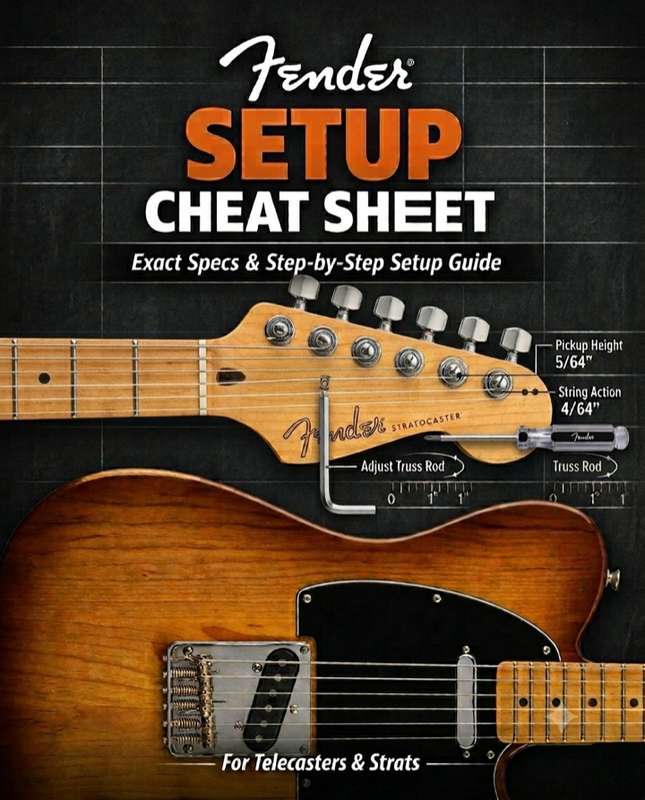
Once the pickups are dated and the guitar is verified, the next step is making it sound its best. Original pickups deserve a proper setup. The Fender Setup Guide puts factory-correct action, relief, intonation, and pickup height specs for your exact year and model on one printable page.