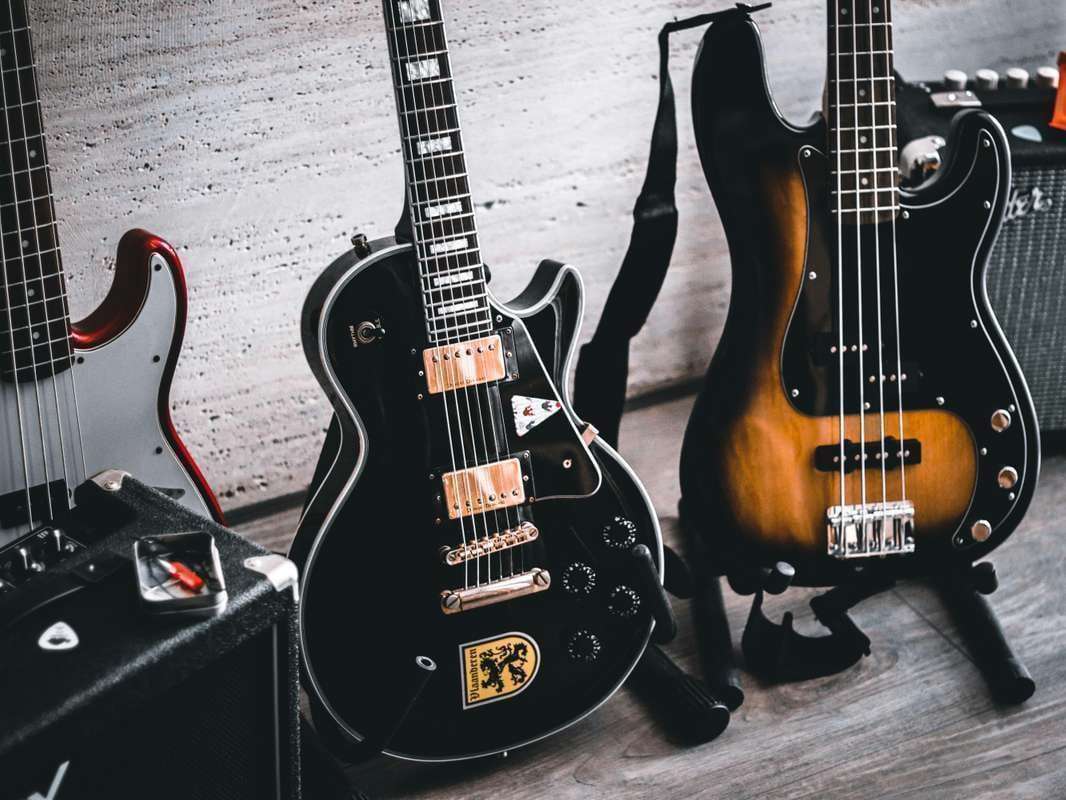
Cort Setup Guide: Acoustic, Electric and Bass Factory Specs
Cort setup guide with Cort's factory specs: relief, 14th-fret action, nut and pickup heights for AD810 and Earth acoustics, G, KX and X electrics and basses.
By Nick TheodoulouUpdated

Your Cort setup0 of 5 done
Let the neck settle before you set the string height
A bigger truss rod change keeps moving for hours, so pros leave it overnight. Re-measure the relief tomorrow, then carry on.
Your ticks are saved on this device.
On this page
A Cort guitar setup is easier than most, because Cort publishes its own factory numbers. Its support FAQ has a factory setting guide for acoustic guitars, electric guitars, electric basses and classical guitars, each giving neck relief, string action and nut height, plus pickup height for electrics and basses. This guide puts those numbers first, then walks through the setup for each type, whether you own an AD810 or Earth acoustic, a G, KX or X Series electric, or an Action or Artisan bass.
Last updated: October 23, 2026. Every number links to the Cort page or manual it comes from.
Quick answer, acoustic (AD810, Earth, Core, Gold): Cort's factory guide sets 0.25 mm (.010") relief at the 8th fret, 2.3–2.8 mm (3/32"–7/64") action at the 14th fret and 0.5–0.7 mm (.020"–.028") nut height at the 1st fret. Keep the room at 45%–48% humidity.
Quick answer, electric (G, KX, X): 0.25 mm (.010") relief (0.30 mm / .012" for vintage types), 1.6–2.0 mm (1/16"–5/64") action at the 14th fret, and pickups 2.5 mm (3/32") under the low E and 3.0 mm (1/8") under the high E.
Quick answer, bass (Action, Artisan): 0.35 mm (.014") relief (0.40 mm / .016" vintage), 2.0–2.5 mm (5/64"–3/32") action at the 14th fret, and pickups 3.0 mm (1/8") low string, 3.5 mm (9/64") high string.
Jump to your guitar:
- Cort factory setup specs — all four charts in one table
- Truss rod: wrench size and direction — every Cort
- Cort acoustic setup — AD810, Earth, Core, Gold
- Cort electric setup — G, KX and X Series
- Cort bass setup — Action and Artisan
- Troubleshooting and FAQ
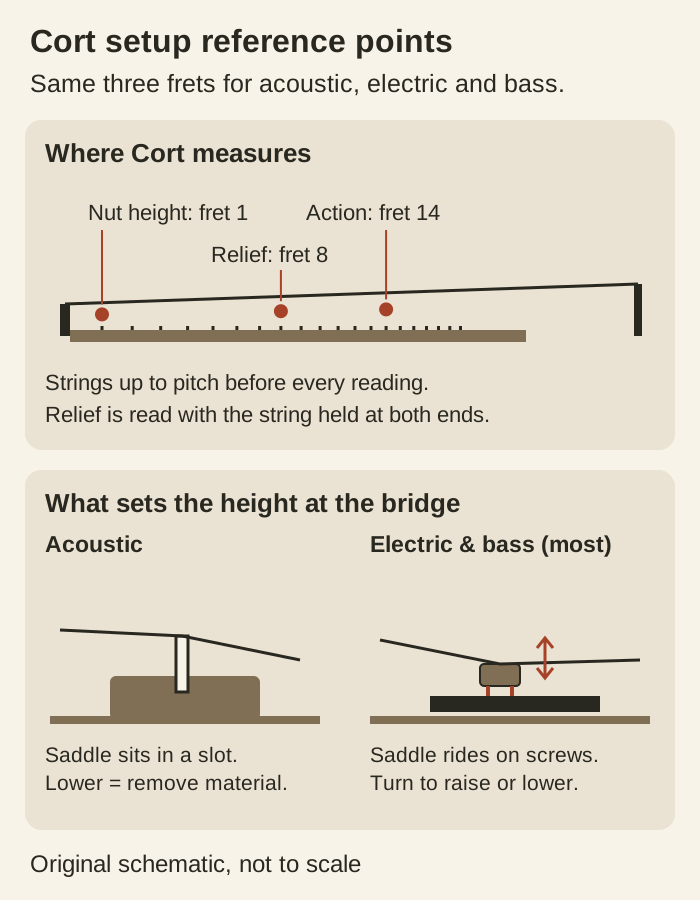
Original schematic, not to scale.
Cort Factory Setup Specs
Cort's support FAQ publishes these as its factory setting guides. All four use the same reference points: relief at the 8th fret, action at the 14th fret and nut height at the 1st fret.
| Spec | Acoustic | Electric guitar | Electric bass | Classical |
|---|---|---|---|---|
| Relief, 8th fret | 0.25 mm (.010") | 0.25 mm (.010"); vintage 0.30 mm (.012") | 0.35 mm (.014"); vintage 0.40 mm (.016") | 0.25 mm (.010") |
| Action, 14th fret | 2.3–2.8 mm (3/32"–7/64") | 1.6–2.0 mm (1/16"–5/64") | 2.0–2.5 mm (5/64"–3/32") | 3.0–3.8 mm (1/8"–5/32") |
| Nut height, 1st fret | 0.5–0.7 mm (.020"–.028") | 0.5–0.7 mm (.020"–.028") | 0.7–0.8 mm (.028"–1/32") | 0.65–0.9 mm (.026"–.036") |
| Pickup height (low / high string) | — | 2.5 mm (3/32") / 3.0 mm (1/8") | 3.0 mm (1/8") / 3.5 mm (9/64") | — |
Source: Cort FAQ, factory setting guides for classical guitars, acoustic guitars, electric basses and electric guitars, checked October 23, 2026.
Cort's owner's manuals are older (the PDF files are dated 2011) and use a different method, so their numbers differ. The electric and bass manuals give 0.3–0.5 mm relief and measure action at the 17th fret with a capo at the 1st; the acoustic manual gives 0.33 mm (.013") relief. Use one method consistently. This guide leads with the FAQ figures because Cort labels them its factory setting guide.
Not sure which model or year you own? The free Cort serial number lookup dates Korean and Indonesian Cort serials. Cort's FAQ adds that a serial number alone cannot identify the model, so check the label or headstock too.
Cort Truss Rod: Wrench Size and Direction
Relief comes first on every guitar, because action depends on it. Tune to pitch, hold the low string at the 1st fret (a capo helps) and where the neck meets the body, as Cort's manuals describe, then read the gap at the 8th fret, where the factory guide measures it.
Wrench size. Cort's FAQ says its guitars typically use a 4 mm hex wrench, or a spoke nut on some models. For acoustics it adds a warning: use a 4 mm L-shaped Allen wrench, not 3/16". All-solid models made in Dalian come with a 120 mm long wrench, and Gold Series models need a 12 cm long hex wrench because the adjuster sits deeper in the neck. The spec sheets confirm it: the AD810, Earth70 and Gold-A6 list a dual-acting rod with a 4 mm wrench, while the G300 Pro, KX500 and X700 Mutility II list a two-way rod with a spoke nut.
Where it is. Cort's truss rod instructions show two types: a headpiece type under a cover at the headstock, and an end-of-fingerboard type reached through the soundhole on acoustics. For soundhole access, Cort says to loosen the 3rd and 4th strings and pull them aside rather than removing them.
Which way. Cort's instructions: if the neck is bowed (too much relief, high action), tighten clockwise; if it has a hump (too little relief, rattles), loosen counter-clockwise. Turn gradually, a small fraction of a turn at a time; the owner's manuals say a quarter to a half turn is usually enough. If the nut gets hard to turn or squeaks, stop and see a technician.
Tools to measure a Cort setup
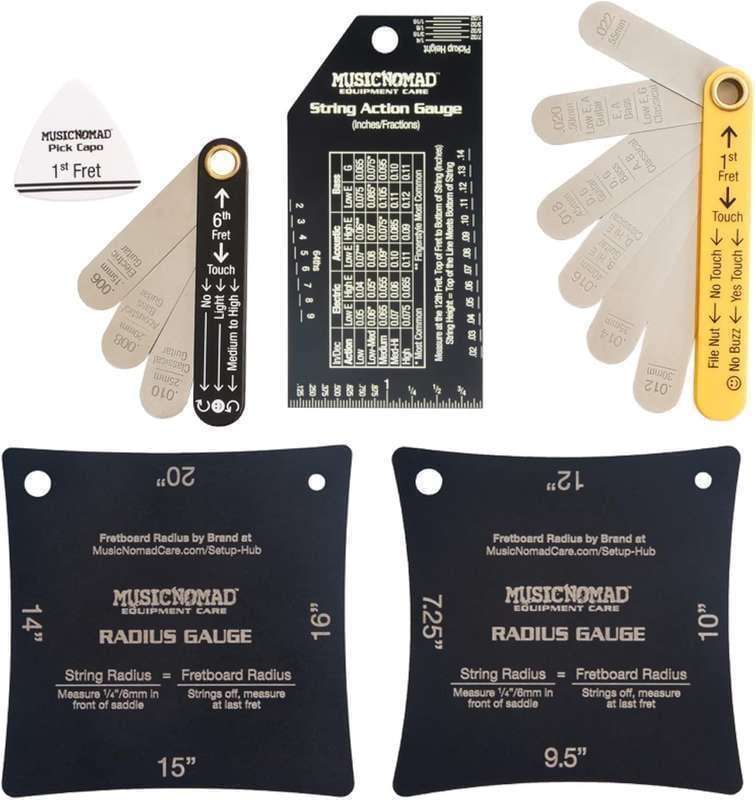
 Buy on Amazon
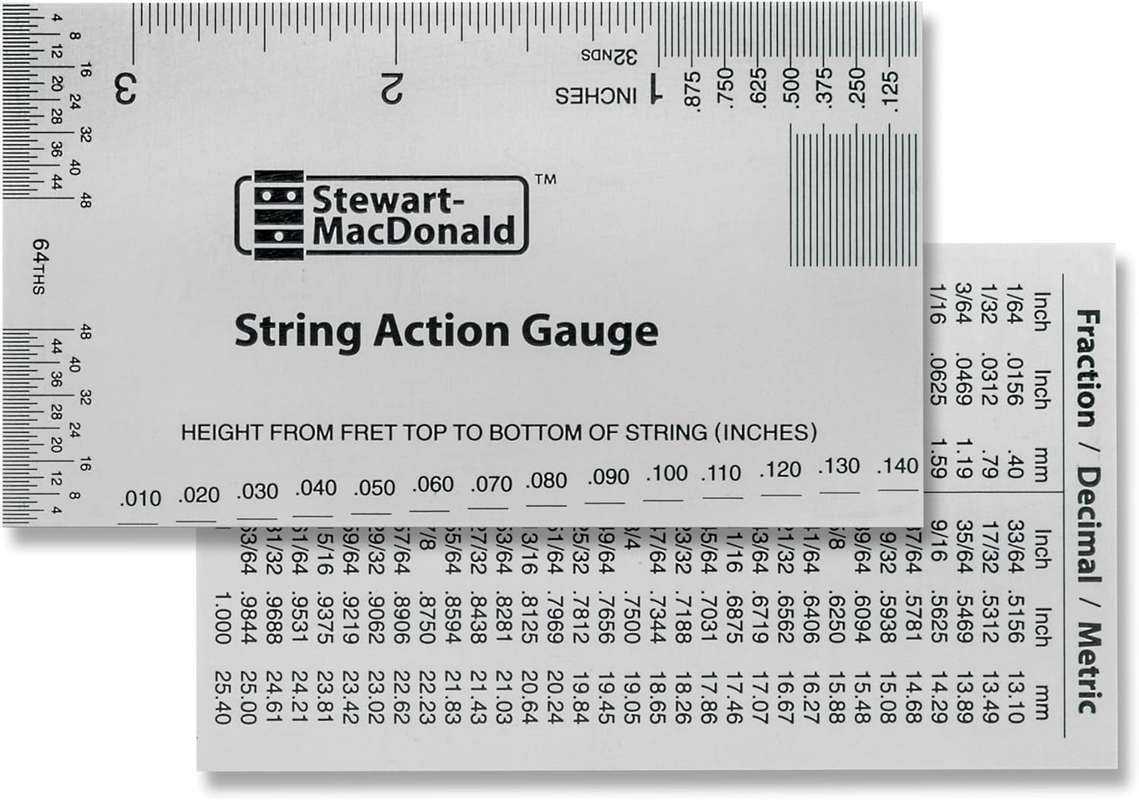
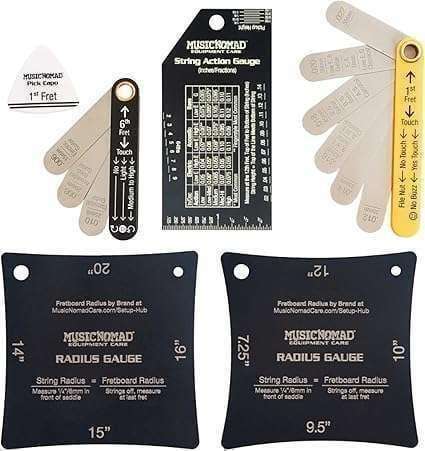
Affiliate links may earn us a commission at no extra cost to you. Our truss rod adjustment guide covers the warning signs in more detail.
Cort Acoustic Setup: AD810, Earth, Core and Gold
Cort's acoustics share the same neck geometry on the models we checked: the AD810, Earth70, Core-OC Spruce and Gold-A6 all list a 25.5" (648 mm) scale and a 15.75" (R400) fingerboard radius. The AD810 and Earth70 use a PPS nut and saddle; the Core and Gold models list a bone saddle.
Step 1: Check humidity before anything else
Cort's FAQ calls humidity changes the greatest danger to a guitar and recommends keeping the room at 45%–48%. If your action changes with the seasons, check the room before you touch the truss rod. Our acoustic humidity guide explains what to watch for.
Step 2: Set relief
Use the 8th-fret reading from the factory guide: 0.25 mm (.010"). Adjust in small turns with the 4 mm wrench, then retune and re-measure. Our acoustic truss rod guide covers soundhole access in more detail.
Step 3: Measure action at the 14th fret
With relief right, measure from the top of the 14th fret to the underside of the string. Cort's range is 2.3–2.8 mm (3/32"–7/64"). If your AD810 or Earth reads higher, recheck relief before blaming the saddle.
An acoustic saddle has no height screws. Lowering action means removing saddle material or fitting a new saddle, which cannot be undone, so measure carefully and consider a technician. Our acoustic action height guide explains how to measure before you adjust.
Step 4: Check the nut
Cort's nut height spec is 0.5–0.7 mm (.020"–.028") at the 1st fret. Cort's FAQ links buzz on the first few frets to the nut: if the 1st–5th frets buzz, the nut slots may need raising. Nut work is a technician job.
Strings for Cort acoustics
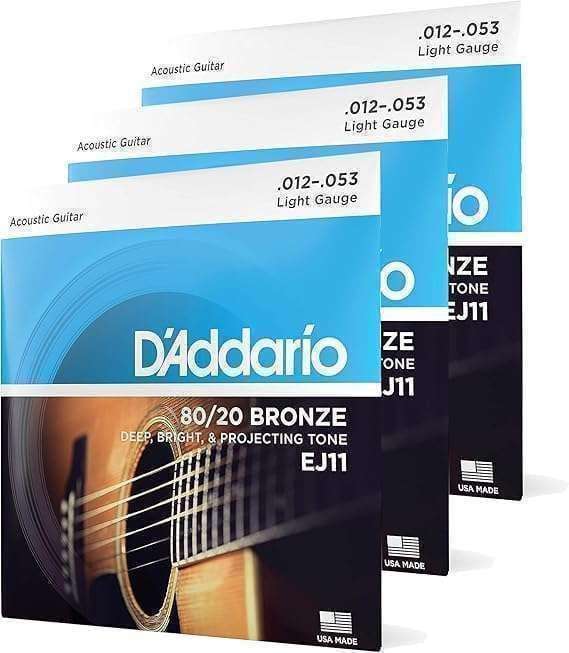
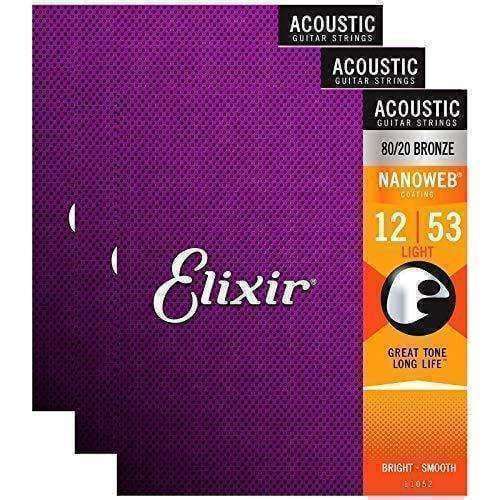
Cort's FAQ says it has used D'Addario 80/20 bronze strings for many years, and that acoustics without a gauge on the spec sheet ship with .012 light gauge coated strings. The Earth70 lists D'Addario XTA PB1253 (.012–.053). Large dreadnoughts and jumbos are fine with medium or light gauges, but Cort warns that small-bodied guitars are not suited to medium strings, because the extra tension can damage the lightly braced top. We would treat 3/4-size models such as the Earth GO (22.8" scale) as small-bodied. Changing gauge changes relief and action, so recheck both afterwards.
Strings and humidity for Cort acoustics

Cort Electric Setup: G, KX and X Series
Cort electrics vary more than the acoustics, so check the bridge and radius on your model's spec sheet first:
| Cort listing | Radius | Bridge | Factory strings |
|---|---|---|---|
| G250 SE | 9.45" (R240) | 2-point tremolo | D'Addario EXL120 |
| G300 Pro | 12"–15.75" compound | Cort CFA-III tremolo | D'Addario EXL120 (.009–.042) |
| KX500 Pale Moon | 15.75" (R400) | Cort hardtail | D'Addario EXL110 |
| KX700 EverTune | 15.75" (R400) | EverTune ET001F | D'Addario .010–.046 |
| X300 | 15.75" (R400) | Floyd Rose Special tremolo | D'Addario EXL120 |
| X700 Mutility II | 15.75" (R400) | Individual bridge, 25"–25.5" multiscale | D'Addario EXL110 (.010–.046) |
Sources, checked October 23, 2026: Cort spec pages for the G250 SE, G300 Pro, KX500 Pale Moon, KX700 EverTune, X300 and X700 Mutility II. Every listing above is a 25.5" scale except the multiscale X700. Cort's FAQ says electrics without a listed gauge ship with .009 light nickel strings.
Set action at the 14th fret
After relief (0.25 mm, or 0.30 mm on vintage types), measure the outer strings at the 14th fret and set them inside Cort's 1.6–2.0 mm (1/16"–5/64") range. Cort's manual says to measure and adjust each string individually; on a hardtail, 2-point or CFA-III bridge that means each saddle's height screws. Our action height guide covers technique.
On the X300's Floyd Rose, change one string at a time: Cort's electric manual unlocks the three nut clamps, centres the fine tuners, and locks the nut again only after retuning, finishing on the fine tuners. Floyd Rose's tuning instructions set action at the two pivot screws with a 3 mm Allen wrench and balance the springs until the base plate sits parallel to the body. Our Ibanez Edge tremolo guide covers the same balancing logic.
On the KX700 EverTune, follow EverTune's quick start: set each saddle in its active zone and tune at the bridge before touching action or intonation. Our LTD setup guide has more EverTune troubleshooting.
Set pickup height
Cort's factory guide sets electric pickups 2.5 mm (3/32") under the low E and 3.0 mm (1/8") under the high E, and bass pickups 3.0 mm (1/8") and 3.5 mm (9/64"). Cort does not say where it measures; the usual method, used in Fender's factory specs, is pole piece to the underside of the string with the last fret held down. Start there and adjust by ear.
Set intonation
Cort's manuals set intonation after string height, because height changes intonation. Tune the open string, fret it at the 12th fret, and compare: if the note is sharp, move the saddle back away from the fingerboard; if flat, move it forward. Repeat for each string.
Cort Bass Setup: Action and Artisan
Cort's basses on our list share a 34" (864 mm) scale and a 15.75" (R400) radius. The bridge and electronics are what change:
| Cort listing | Bridge | Electronics | Factory strings |
|---|---|---|---|
| Action Bass Plus | Cort EB6 | Active 2-band EQ | Not listed |
| Action PJ | Cort EB6 | PJ set, 2 volumes and tone | Not listed |
| A4 Plus FMMH | Hipshot TransTone | Bartolini MK-1 | D'Addario EXL165 (.045–.105) |
| B5 Element | MetalCraft M5 | Bartolini MK-1 preamp | D'Addario EXL170-5 (.045–.130) |
Sources, checked October 23, 2026: Cort spec pages for the Action Bass Plus, Action PJ, A4 Plus FMMH and B5 Element. Cort's FAQ says basses without a listed gauge ship with .045–.105, or .045–.130 on 5-strings.
Work in the same order as a guitar, using the bass column of the factory guide:
- Relief: 0.35 mm (.014") at the 8th fret, or 0.40 mm (.016") on vintage types.
- Action: 2.0–2.5 mm (5/64"–3/32") at the 14th fret, set at each saddle.
- Pickups: 3.0 mm (1/8") under the lowest string, 3.5 mm (9/64") under the highest.
- Intonation: the same 12th-fret check as a guitar.
Make truss rod turns small and give the neck time to settle before re-measuring. Our bass fret buzz guide and bass intonation guide go deeper.
Troubleshooting Cort Setups
Cort's FAQ gives a simple buzz map. First recheck the guitar against the factory setup, then:
- Buzz on the 1st–5th frets: raise the nut slots (a technician job).
- Buzz on the 5th–12th frets: add relief by loosening the truss rod.
- Buzz from the 12th fret up: raise the action.
Action changed with the season. Check the room against Cort's 45%–48% humidity range before adjusting anything.
The truss rod will not turn. Check you are using 4 mm, not 3/16", and the long wrench on Gold Series or Dalian all-solid models. If it is still hard to turn or squeaks, stop.
Strings changed and now it buzzes. Cort's manuals say a gauge change will change relief, action and intonation, so go back through the setup in order.
If you are unsure about any of these, Cort recommends an authorized Cort dealer or a professional technician. Our general fret buzz guide covers electric diagnosis in more detail.
FAQ
Does Cort publish factory setup specs?
Yes. Cort's support FAQ has factory setting guides for acoustic, classical, electric guitar and electric bass, each with relief at the 8th fret, action at the 14th fret and nut height at the 1st fret, plus pickup heights for electrics and basses.
What is the factory action on a Cort AD810?
Cort's acoustic factory guide gives 2.3–2.8 mm (3/32"–7/64") at the 14th fret, with 0.25 mm (.010") relief at the 8th fret. The AD810 spec sheet lists a 25.5" scale, 15.75" radius and PPS nut and saddle.
How much neck relief should a Cort have?
Cort's factory guide gives 0.25 mm (.010") at the 8th fret for acoustic and electric guitars (0.30 mm on vintage-type electrics) and 0.35 mm (.014") for basses (0.40 mm vintage). Cort's older owner's manuals use a different method and slightly different figures.
What size wrench fits a Cort truss rod?
Cort says its guitars typically use a 4 mm hex wrench, not 3/16". Some models use a spoke nut instead. Gold Series models need a 12 cm long hex wrench, and all-solid acoustics made in Dalian come with a 120 mm long wrench.
Where is the truss rod on a Cort acoustic?
Either at the headstock under a cover, or at the end of the fingerboard, reached through the soundhole. For soundhole access Cort says to loosen the 3rd and 4th strings and move them aside rather than removing them.
How do I lower the action on my Cort acoustic?
Check humidity and relief first. If action at the 14th fret is still above Cort's 2.3–2.8 mm range, the saddle has to come down, which means removing material or fitting a new saddle. That is permanent, so measure carefully or have a technician do it.
What pickup height does Cort use on electric guitars?
Cort's factory guide sets 2.5 mm (3/32") under the low E and 3.0 mm (1/8") under the high E. Bass pickups are set at 3.0 mm and 3.5 mm. Measure from the pole piece to the string with the last fret held.
What is the factory setup for a Cort bass?
Cort's bass factory guide gives 0.35 mm (.014") relief at the 8th fret, 2.0–2.5 mm (5/64"–3/32") action at the 14th fret, 0.7–0.8 mm nut height and pickups at 3.0 mm (low string) and 3.5 mm (high string).
Can I put medium-gauge strings on a Cort acoustic?
On large dreadnoughts and jumbos, yes, according to Cort's FAQ. Cort warns that small-bodied guitars are lightly braced and not suited to medium strings, because the extra tension can damage the top.
Why does my Cort guitar buzz?
Use Cort's buzz map: buzz on the 1st–5th frets points to the nut slots, the 5th–12th frets to too little relief, and the 12th fret up to low action. Recheck the factory setup first, and see a technician if you are unsure.
Final Checks
Measure relief at the 8th fret, action at the 14th and nut height at the 1st, and compare each with Cort's chart for your guitar type. Change one thing at a time and retune after every adjustment. Buying or selling a Cort? Date it with the free Cort serial number lookup and get a Guitar Valuation Report.
Related Posts
Acoustic Guides
- Ultimate Acoustic Guitar Setup Guide — the full acoustic method
- Acoustic Guitar Action Height — measure before you adjust
- Acoustic Truss Rod Adjustment — relief through the soundhole
- Acoustic Guitar Humidity — when action changes with the seasons
Electric and Bass Guides
- Guitar Action Height Guide — measure and set string height
- Guitar String Gauges — choosing a set before you re-set up
- Bass Fret Buzz — find the cause before adjusting
- Jackson and Charvel Setup — Floyd Rose balancing for the X Series
- Schecter Setup Guide — 7-string, multiscale and EverTune setup
- Cort Serial Number Lookup — date your Cort
🛠️ Done with this setup? Log the spec — action, relief, strings — in My Gear Garage so you remember exactly what you did in six months. Free, no password — magic-link sign-in.